Projects

Town hall Stolberg

A resilient, citizen-oriented new beginning

Type Administration Construction volume GFA 12,000 m² Client Kupferstadt Stolberg Architecture kadawittfeldarchitektur Competition 2025 2nd prize, contract awarded in accordance with VgV Certification DGNB Platinum targeted Landscape architects Greenbox Landschaftsarchitekten

PDF-Download

#New town hall for the copper town of Stolberg

The new building brings the town administration back together in one place after the flood disaster and offers citizens a welcoming point of contact in the centre of town. The building is flood-resistant and designed according to the cradle-to-cradle principle.

Like the Ahr Valley, Stolberg’s city centre was also affected by the flood disaster in 2021 – large areas were under water. The Technical Town Hall, built in the 1970s, was also severely damaged and could not be put back into operation. The flood-resilient new building is being constructed in its place.

The structure fits into the urban fabric on a scale that respects the historic town hall, keeping a respectful distance and not towering over it. The listed existing building remains exposed to Kaiserplatz. Nevertheless, the new building is present in the “second row” and its spacious forecourt opens invitingly to the edge of the square.

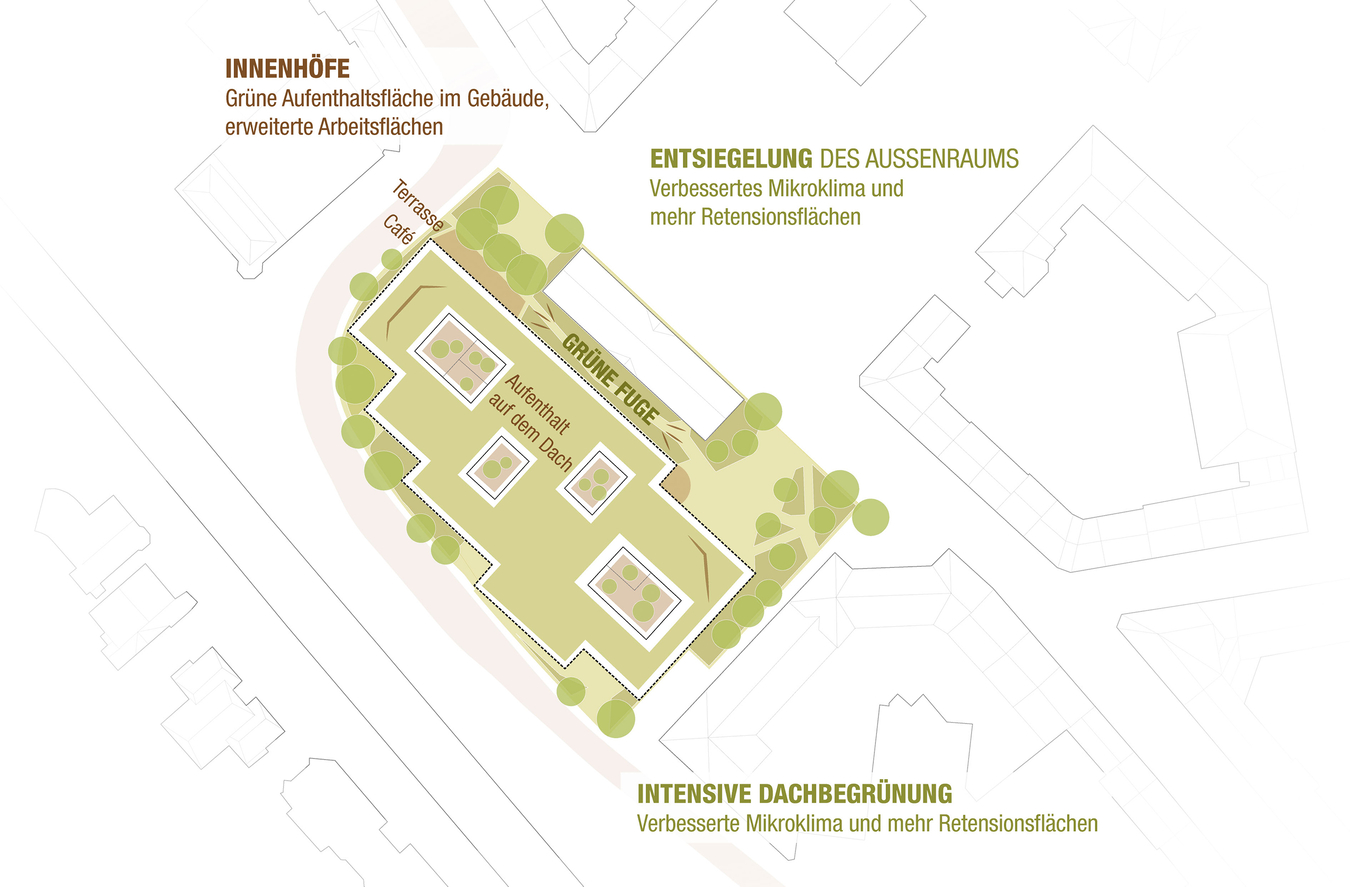
The sustainability concept includes a CO2-reduced, cradle-to-cradle-inspired construction method and a high degree of greening. Large glazed areas and four inner courtyards provide omnipresent views of greenery within the building, and the roof landscape offers employees an additional outdoor recreation area.

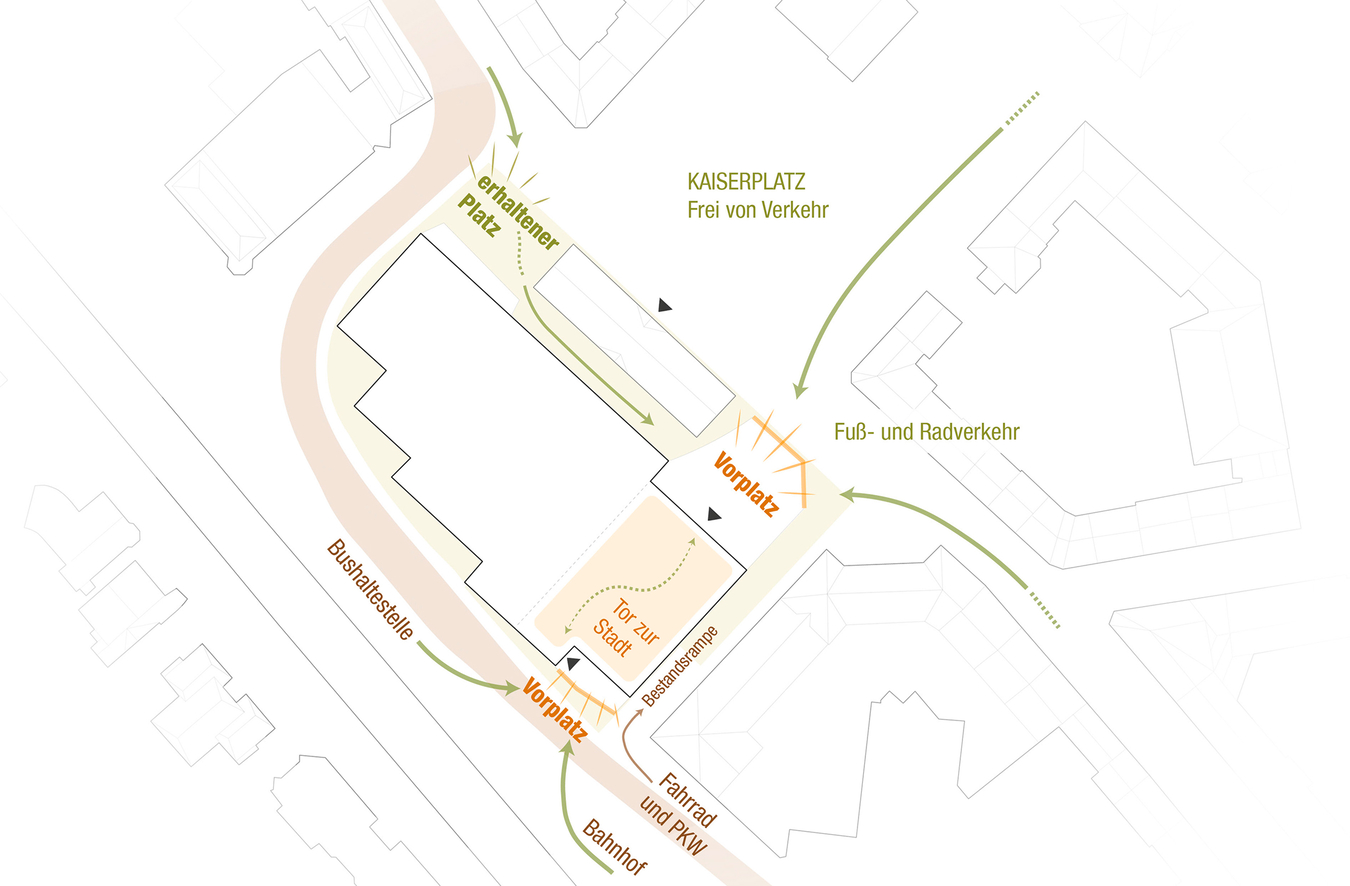
The new town hall gives way to the historic existing building. It maintains an appropriate distance and, with its appearance and height, subordinates itself to the existing building without losing its presence in the urban space.

The citizen service centre can be reached in a variety of ways: centrally from Kaiserplatz, but also directly from the public transport stop in the south-west.

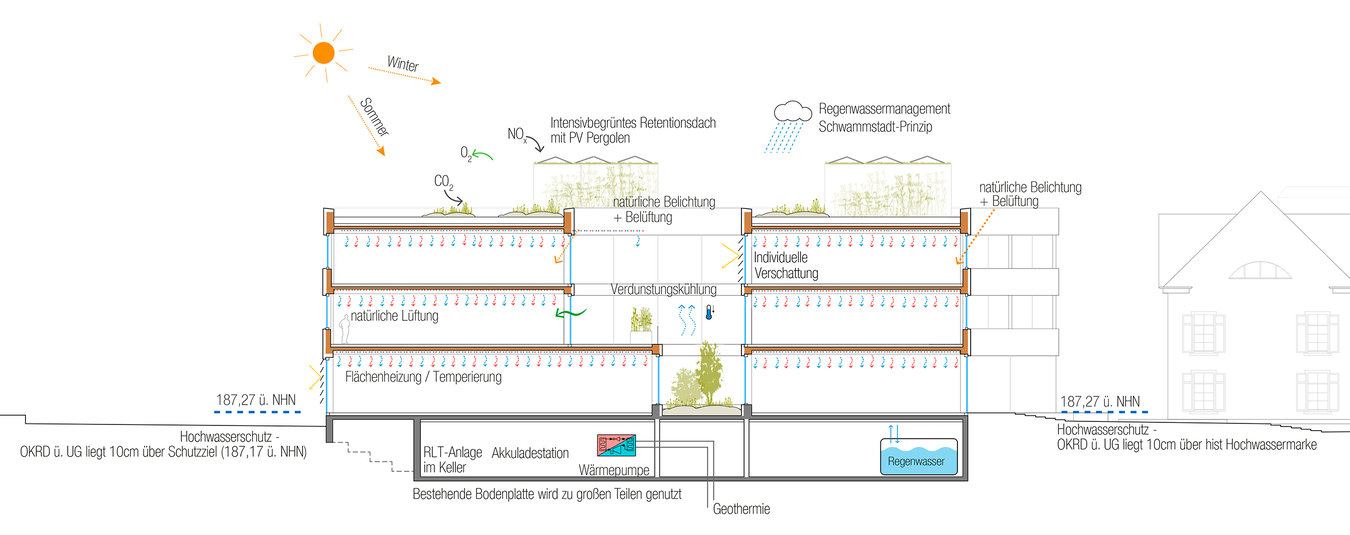
The new building will significantly increase the amount of greenery on the site: the outdoor space will be unsealed, a variety of recreational areas will be created, and the microclimate and retention capacity will be improved.

Wind simulations were used to simulate the effects of different new building volumes on the quality of life at Kaiserplatz: in contrast to taller variants, the three-storey new building does not impair comfort on the square.

‘The design for the new town hall in the copper town of Stolberg is a successful response to the need for a sustainable building in a prominent location in the town centre, both in terms of its urban integration, its scale, its three-storey height and its greenhouse gas-reduced construction.’

The competition jury

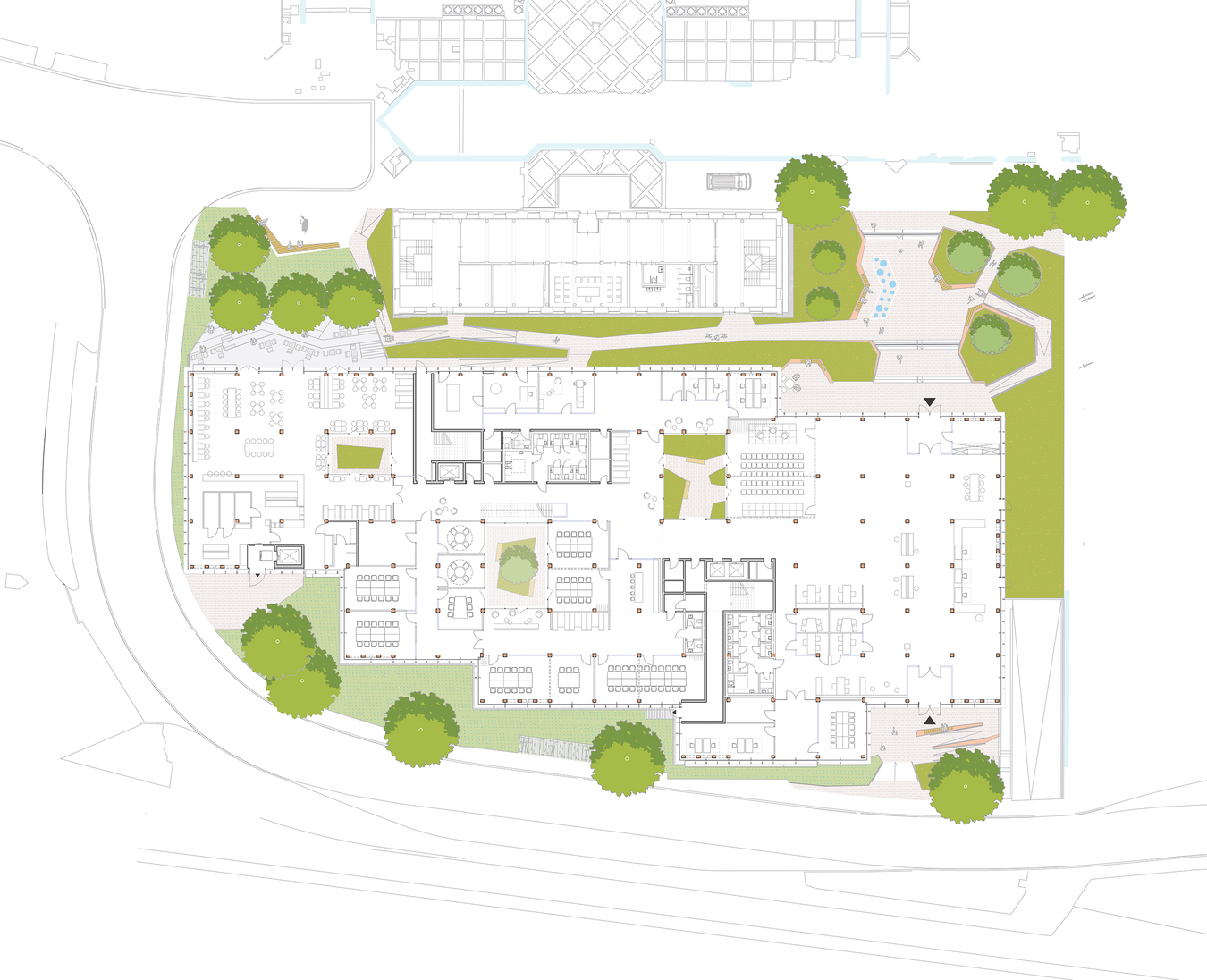
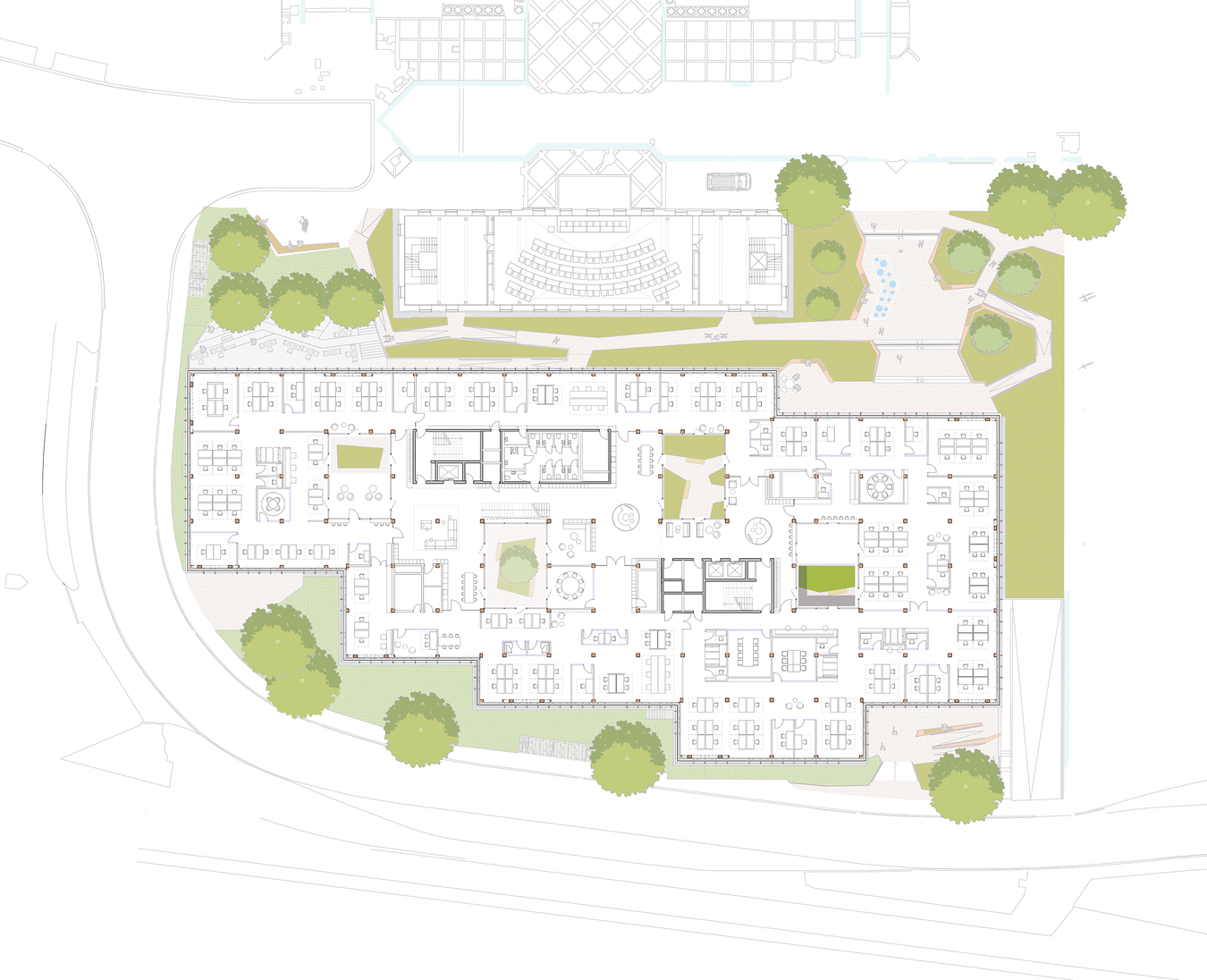
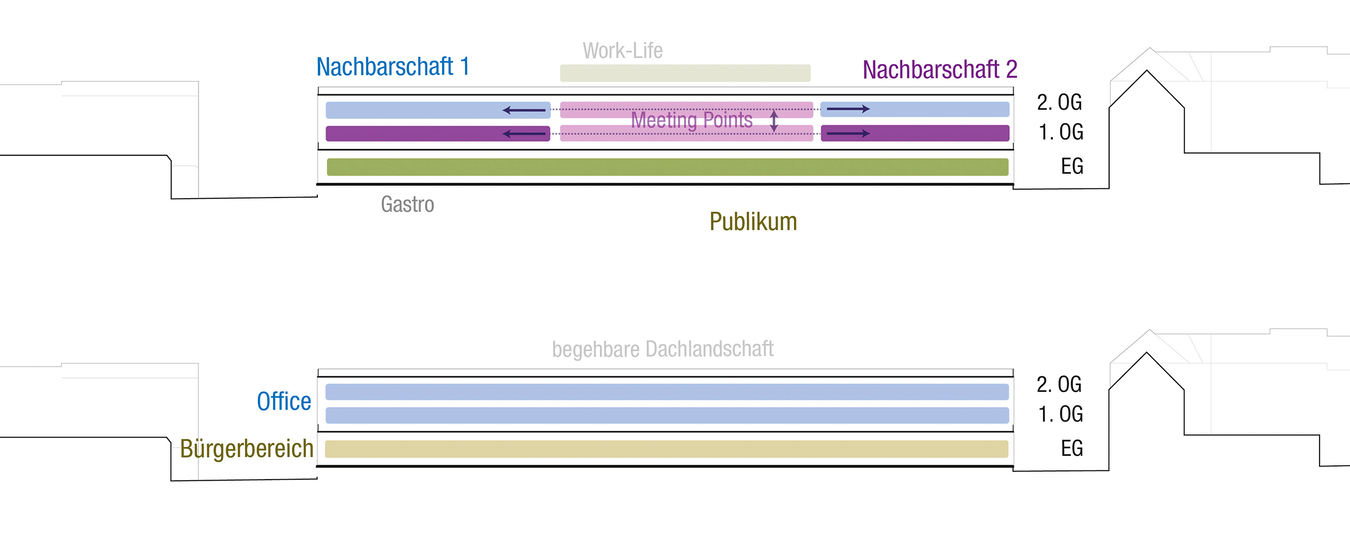
The ground floor is divided into three accessibility and security zones: from the foyer with adjoining citizen services to the meeting area, the staff canteen and a work-life balance room.

The ground floor houses all facilities that are also accessible to external visitors. It is divided into three zones with different access and security levels: the foyer with adjoining citizen service centre, the central meeting centre, and the staff canteen and work-life balance area in the west. All three areas can be accessed and used separately.

A spacious forecourt leads from Kaiserplatz to the main entrance. In the foyer, citizens will find a spacious waiting area with an information point, directly connected to the citizen service centre. A second entrance in the south-west leads directly to the public transport stop.

Employees also enter the building via the foyer, from where they can access the non-public meeting area with meeting and event rooms as well as the parliamentary group rooms. Citizen consultations are also possible by prior appointment and with separate admission for special requests. Green inner courtyards structure the interior and, together with the generously glazed façades, create an open, bright, natural atmosphere. A central, open staircase leads to the workplaces on the upper floors.

The staff canteen and its outdoor terrace offer a view of Kaiserplatz. It can be reached in various ways from the upper floors, but is also a short walk from the historic town hall.

‘The designer has succeeded in developing an open, easily accessible and citizen-friendly spatial concept.’

The competition jury

The inner courtyards create a bright, natural atmosphere in the building and structure the working environments.

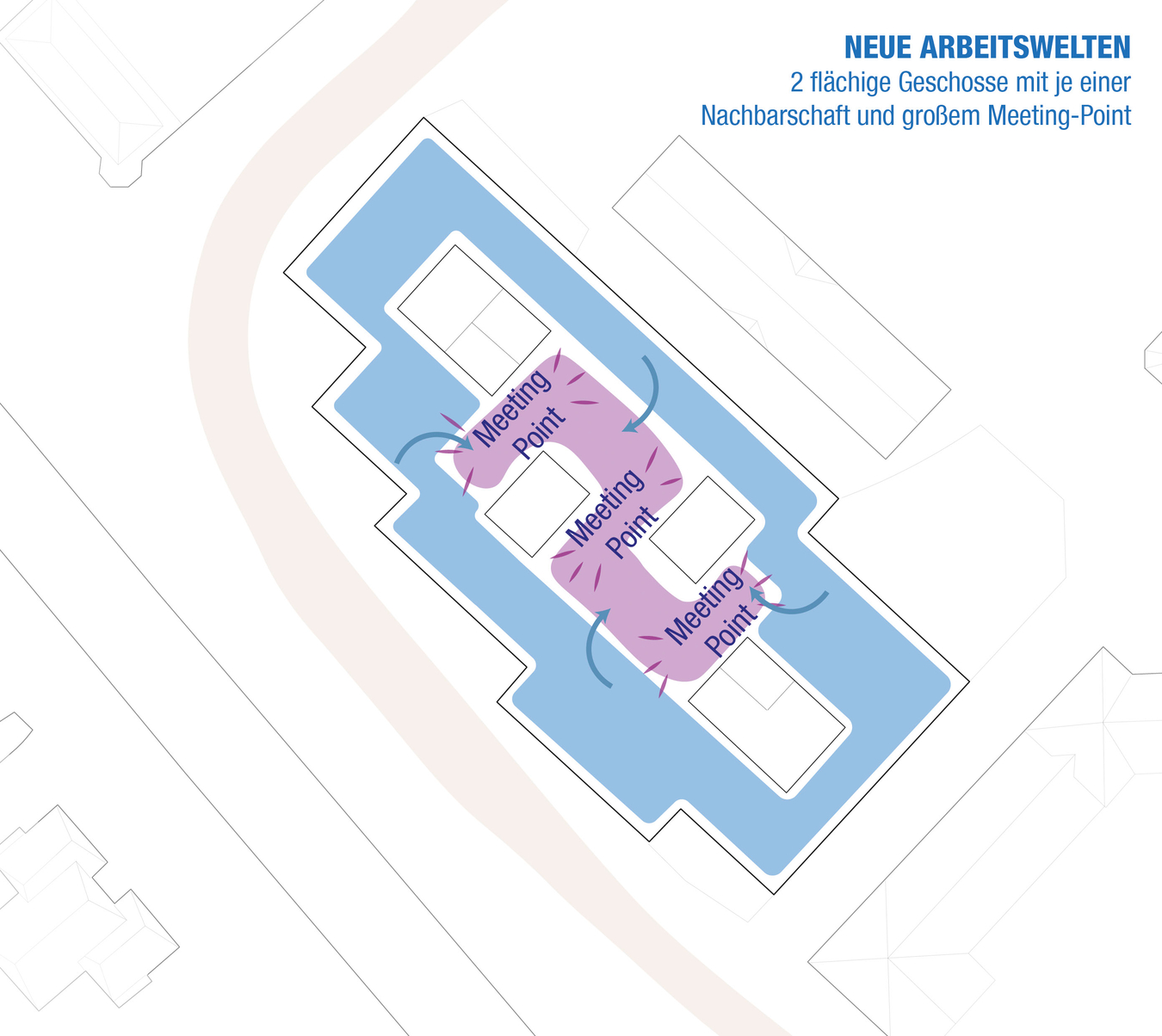
The two upper floors will feature innovative working environments based on the activity-based working principle.

Meeting point with two-storey airspace and gallery ensures close communication across floors.

The upper floors feature diverse, flexible working environments based on the activity-based working principle, with spacious communication and meeting areas as well as differentiated zones for concentrated work. Different types of workstations cater to the varying needs of employees.

Centrally located communication areas are shared by two “neighbourhoods”. Two-storey air spaces connect some meeting points across the floors and promote exchange between all employees.

The inner courtyards also characterise the working environment on the upper floors – daylight and views of greenery are omnipresent. Their staggered arrangement creates a meandering structure through which the meeting zones are “fluently” integrated into the working environments and at the same time spatially defined. Additional work areas are provided in the inner courtyards and on the roof terrace.

The interior of the town hall is characterised by a clear structure.

©kadawittfeldarchitektur

The green roof landscape is a place to relax, recharge and work, as well as being part of the sustainability concept.

The green, accessible roof invites employees to take a deep breath and linger. Here, they can enjoy their lunch break with a view of the castle, or even work. The roof area also serves as a retention area and, with its greenery, enhances biodiversity.

The transparent façade with structured ceramic pilasters is recyclable. Design elements such as colourfulness, horizontal banding and surrounding white cornices refer to the historic town hall.

©loomilux

South façade with access from the public transport stop.

Sustainability concept

The new town hall building consistently follows the cradle-to-cradle principle. The supporting structure of the office areas is designed as a hybrid timber skeleton. Load-bearing components are assembled using single-type materials and without adhesives or composite materials, enabling complete dismantling and reuse. A building resource passport documents all relevant information for subsequent renovations or circular dismantling.

The planning is based on high resource and material efficiency: reduced spans, minimised ceiling thicknesses and a targeted choice of building materials according to performance, resource use and cost-effectiveness. Glued laminated timber creates a pleasant working atmosphere and shortens the construction time. All materials are tested for the absence of harmful substances using the ‘C2C banned list of chemicals’.

Reinforced concrete is only used where structurally necessary, as well as in the ground floor and basement to ensure flood resilience. The use of CO2-reduced concrete is planned. Composite components such as wood-concrete composite ceilings have been deliberately avoided in order to ensure pure separation of materials. The curtain wall is recyclable, weather-resistant and low-maintenance.

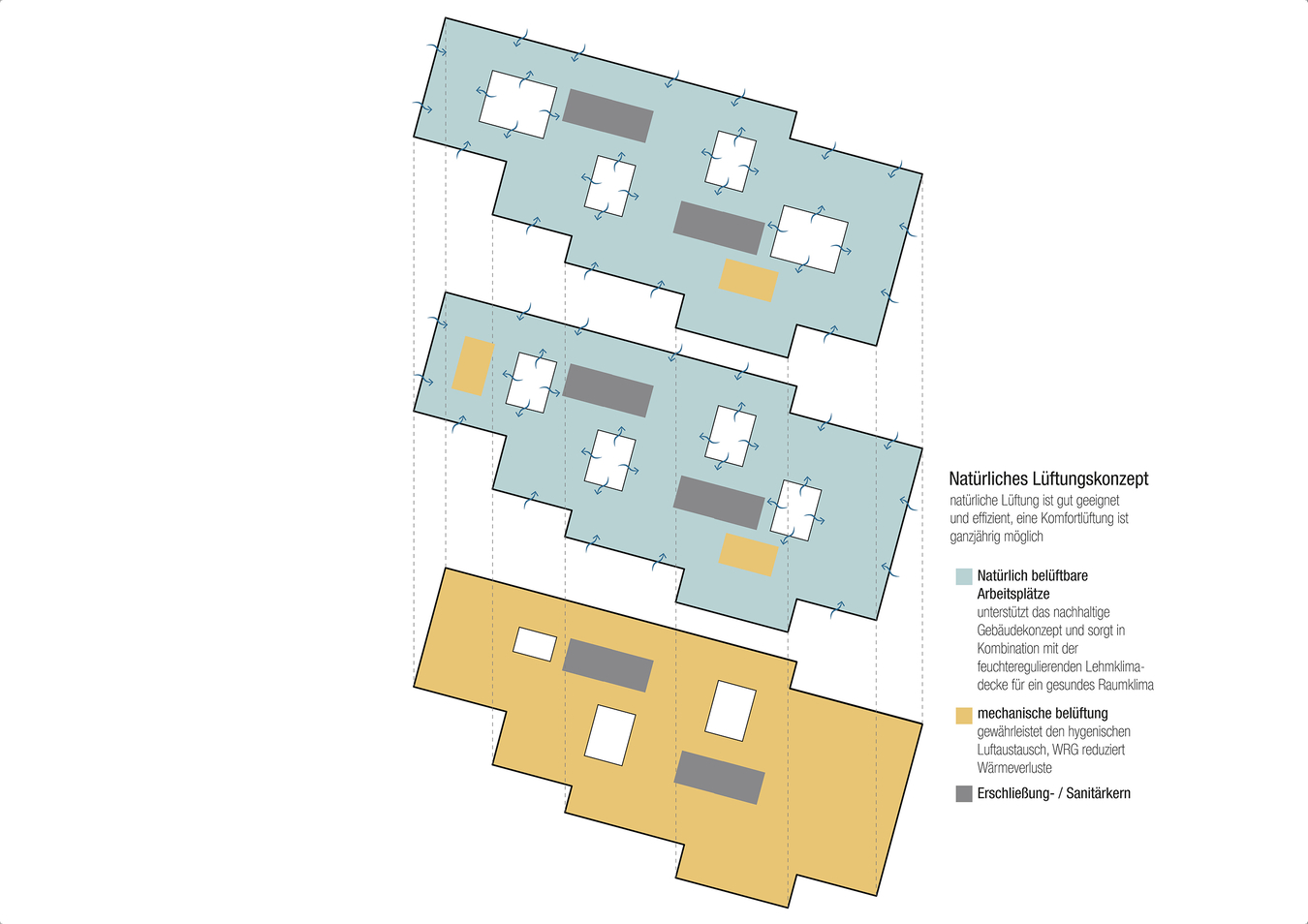
Energy requirements are met by renewable sources: reversible heat pump technology and an ice storage system supply the building with climate-friendly heating and cooling, while photovoltaic systems on the roof generate electricity. A hybrid ventilation concept combines natural ventilation with air handling units with highly efficient heat recovery, which reduce heat loss in winter and protect against overheating in summer.

The high level of greening creates a special quality of life. The green space ratio (GrünFZ) is 52%. Aspects such as soil functionality, climate adaptation and biodiversity are also included in the assessment. By way of comparison, the city of Salzburg has set a target value of 25%.