Projects

LVR building on Ottoplatz

Working together with neighbours

Type Office and administration Location Cologne Construction volume GFA 49,100 m², GIA 198,600 m³ Client Rhineland Regional Council (LVR) Architecture kadawittfeldarchitektur Competition 2017 – 1st prize, negotiated procedure in accordance with VgV – 1st prize Certification target DGNB Platinum

PDF-Download

New construction of an office and administration building with underground car park for the Rhineland Regional Council (LVR) on Ottoplatz in Cologne-Deutz

The new building translates the spirit of the LVR into built structure. Social responsibility and participation are manifested in a recyclable, sustainable building that allows public space to flow into its interior.

Structurally integrated into its surroundings, the LVR building complements and frames the public square of Deutz railway station opposite.

The building complex, visible from afar, brings together the seven LVR locations previously scattered across Cologne-Deutz. It consists of an 18-storey high-rise building and an adjoining five- to six-storey shell structure, creating a total of 1,200 workplaces.
The volume and contours of the new building blend in harmoniously with its immediate surroundings and, thanks to the forecourt, maintain a respectful distance from the listed Deutz railway station opposite. The highest point of the building complex protrudes towards the neighbouring Triangle Tower on the western edge of the station, creating a pleasant setting for the street and square. With restaurants in the base area, the building faces Ottoplatz, thus enhancing its urban qualities.

With its building lines, projections and recesses, the LVR building establishes a variety of references to its immediate surroundings and responds to the heights of the surrounding buildings. Even though its volume and contours are integrated into the immediate environment in a differentiated manner, the ensemble, which brings together various LVR locations at the new site, deliberately presents itself as “one building”.

With its tower and surrounding buildings, the building complex defines clear edges that spatially enclose Ottoplatz. The protruding high-rise slab on the western side protects the main entrance from the traffic on the busy Opladener Straße. In dialogue with the Deutz railway station opposite, a public urban space is created that becomes the representative forecourt of the LVR.

The main thoroughfare connects a series of spaces with different qualities. It leads from the urban forecourt through the communicative, multi-storey atrium to the green oasis in the inner courtyard.

©kadawittfeldarchitektur

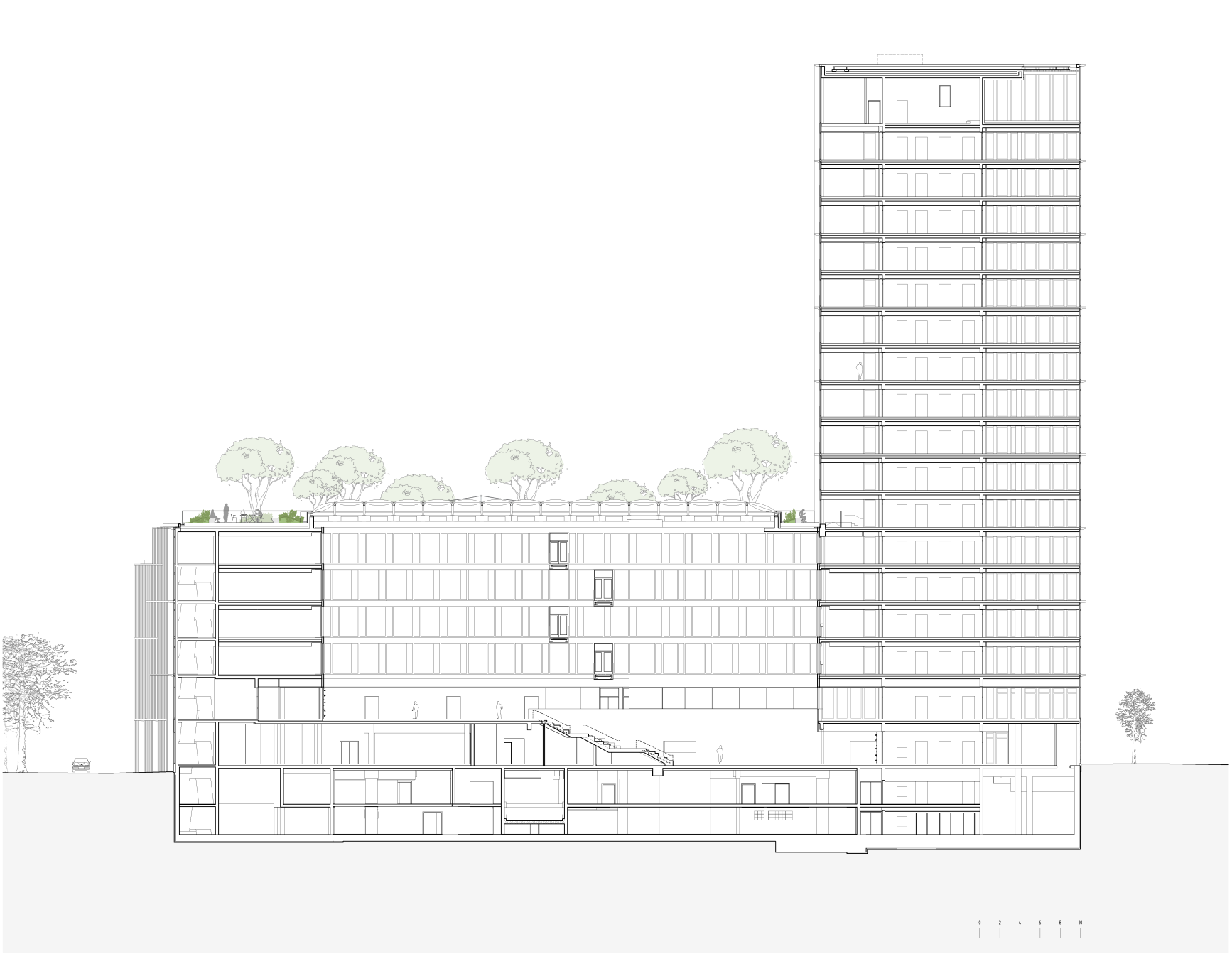
An open house: The spacious 6-storey atrium forms the communicative heart of the LVR building. It invites users and visitors alike to linger and engage in conversation.

360° view by clicking on the image!

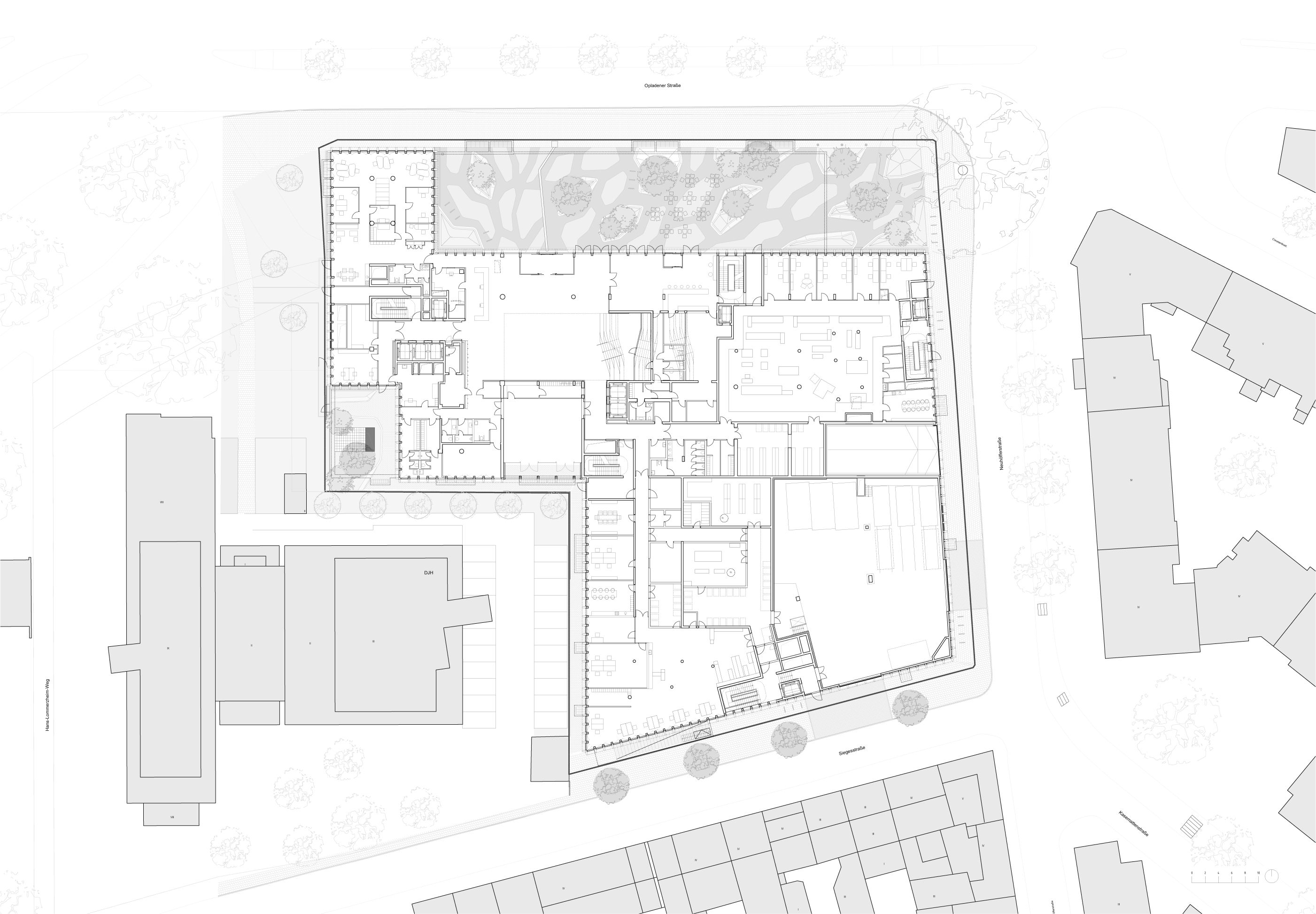
Ground floor with atrium and landscaped forecourt.

Cross-section with 6-storey atrium.

©kadawittfeldarchitektur

On the first floor, the atrium transitions into the seminar area.

The atrium is the communal, communicative heart of the building, serving as both an informal meeting place and a welcoming gesture. This is where the main corridor begins, serving as a central, structuring element. It provides orientation and, as a light-flooded spatial continuum, connects the main entrance with the high-rise, the eastern entrance and the inner courtyard on the first floor. As soon as you enter the spacious foyer, the building and its clear organisational structure become apparent at a glance. All public-facing areas and cross-departmental areas are grouped in a ring around the central axis and the green inner courtyard.

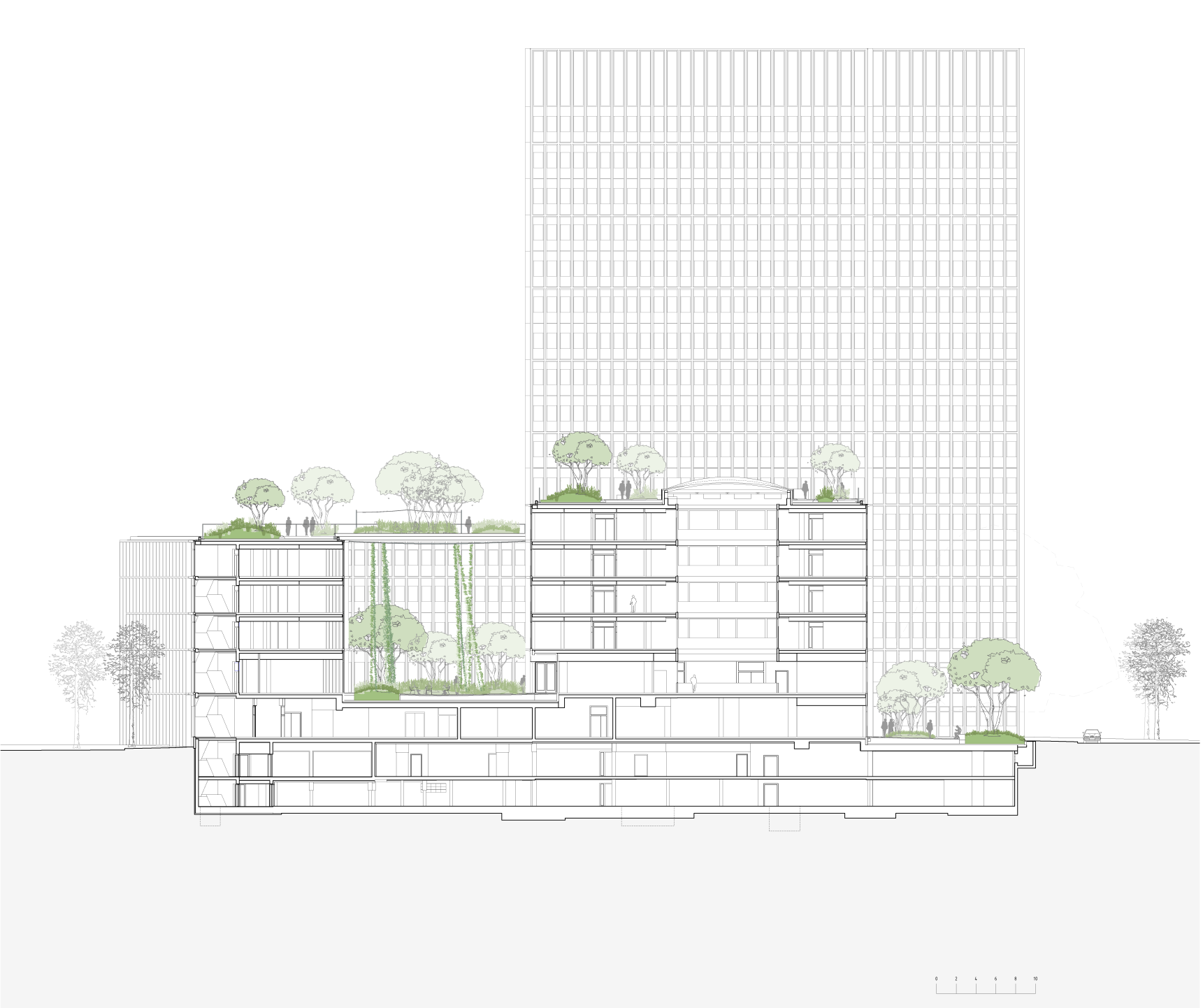
Section with courtyard and atrium.

©Greenbox

The green inner courtyard invites visitors to linger, while also improving the microclimate, providing space for biodiversity and ensuring summer shade for the facades. The design was created by GREENBOX landscape architects.

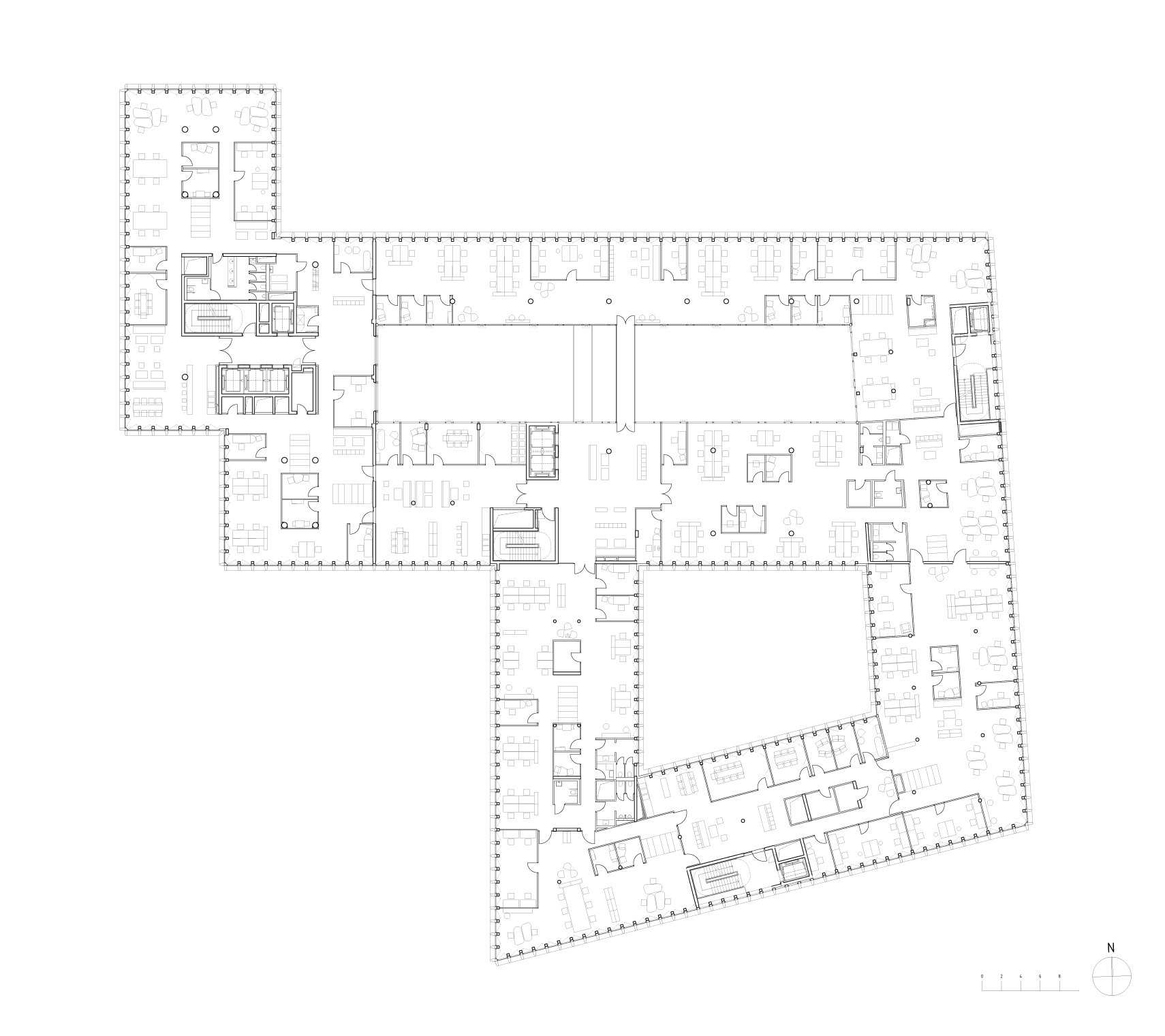
Open, communicative office landscape inside.

The office landscapes are based on the concept of activity-based working. The working environments are grouped around a central communication zone. This high-quality area contains all the meeting rooms, kitchenettes and lounges used by all teams. Employees have a variety of workspaces at their disposal, both for individual and concentrated work and for team discussions. The wide range of different workspaces allows for working in multi-space areas, in exclusive zones for smaller and larger project teams, in quiet work zones, in individual offices or even in the fresh air.

Landscape architecture

Creating high-quality spaces for people is also the goal of GREENBOX landscape architects’ open space planning. Due to the LVR’s spatial and thematic proximity to the Rhine, the geological structures of the lower terraces are reflected in the design of the outdoor facilities. Soft, flowing forms characterise the design of the forecourt, inner courtyard and roof gardens. Inspired by the floodplain landscapes of the Rhine valley, these can be used as outdoor workspaces or places for breaks and encounters.

©Greenbox

The open space concept by GREENBOX landscape architects draws on the structures of the lower terraces of the Rhine.

©Greenbox

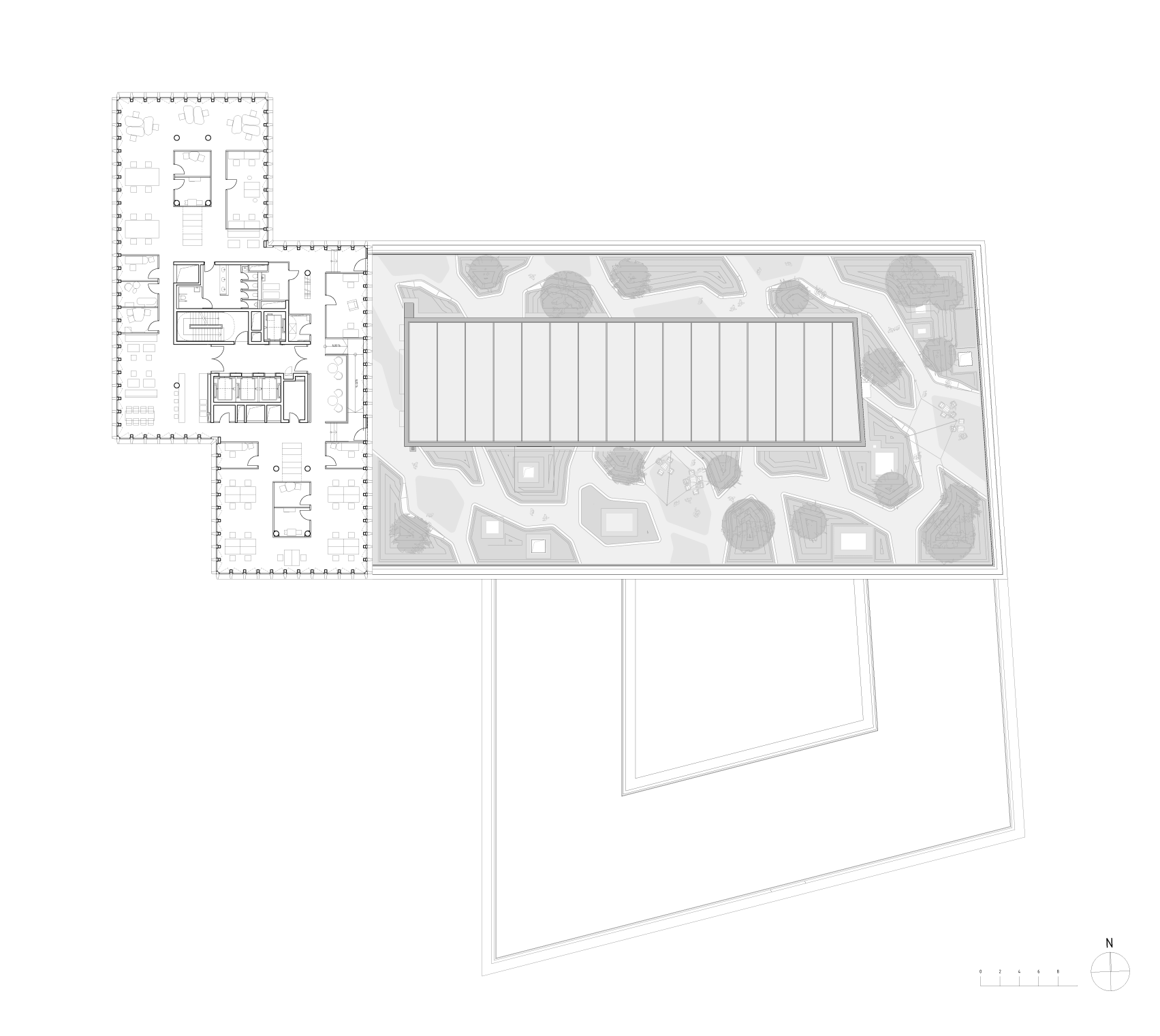
The rooftop landscape on the Mantel buildings invites you to take a break in the green surroundings or even to work.

A green house – sustainability aspects

Sustainability aspects: Use of sustainable + ecological materials, integrated water management, sustainable mobility, use of recycled concrete, creation of a material passport, roof and courtyard greening.

The new LVR building follows the cradle-to-cradle (C2C) principle. The building was designed so that, as far as possible, all materials used can be separated by type after use, reused or returned to biological cycles. The aim of the C2C principle is a continuous material cycle without waste.
The criteria for selecting the materials and building materials used in the new building are renewable raw materials, durability and freedom from harmful substances. In order to achieve a positive CO2 balance, building materials are reused, e.g. through the use of recycled concrete. The use of healthy materials has a positive effect on the well-being of all employees. In combination with a green inner courtyard and lush roof gardens, this creates a healthy and sustainable working environment that also encourages working in the fresh air.
The plants in the outdoor area have a cooling and air-purifying effect and produce oxygen. Together with beehives, they contribute to biodiversity in the district and strengthen the local ecosystem. Horizontal green spaces serve as retention areas and enable the use of rainwater.
Other measures include a photovoltaic system for generating electricity, the use of groundwater for building temperature control, and an energy-efficient, durable ETFE roof over the atrium, which saves on construction materials thanks to its low weight.

©Loomuilx

The slender “two-disc” high point of the LVR building, together with the triangular high-rise, forms a landmark opposite the cathedral on the other side of the Rhine.

Work in Progress

Laying of the foundation stone,  august 2025

©kadawittfeldarchitektur
©Bastian Geza Aschoff/ LVR
©kadawittfeldarchitektur

With the laying of the foundation stone, we have symbolically kicked off the construction of the new LVR building. We would like to thank everyone involved in the project who made this important step possible and look forward to continuing our journey together until completion!

Construction site update, march 2025

August 27th, 2024
Ground-breaking ceremony for the LVR at Ottoplatz in Cologne

The ground-breaking ceremony for the new office and administration building with underground car park for the Landschaftsverband Rheinland (LVR) at Ottoplatz in Cologne-Deutz took place today.

The highly visible building complex, consisting of an 18-storey tower and an adjoining five- to six-storey shell, will provide more than 1,000 workplaces.

With catering facilities in the basement, the building faces Ottoplatz and supports its urban qualities. The spacious foyer, which connects the shell to the tower, forms the entrance to the office tower. Public areas such as conference rooms and a cafeteria are grouped around a central atrium and provide access to the southern office floors with a green courtyard.

posted by
Eva Syllwasschy