Projects

ETM Campus Melaten

Gateway to Innovation –
An entry point for research and exchange

Typology Education, research Construction volume GFA 11,217 m², GV 57,479 m³ Client Bau- und Liegenschaftsbetrieb NRW (North Rhine-Westphalia Building and Real Estate Management Agency) User RWTH Aachen University, Institute of Electrical Engineering Architecture kadawittfeldarchitektur General planning Arge Borgmann und Partner with kadawittfeldarchitektur Realisation 2018–2023 Commissioning 2025 Negotiation procedure 1st prize – 2013 Project management Volker Steinbrenner (until LP5), Elisabeth Borghetto (from LP5)

Brief New construction of the second phase of the Electrical Engineering Faculty on the Melaten Campus of RWTH Aachen University.
Added value In close coordination with the five different users of the new building, a cross-institutional laboratory level is being established to promote communication and collaboration between all employees and enable efficient building services.

©Jens Kirchner

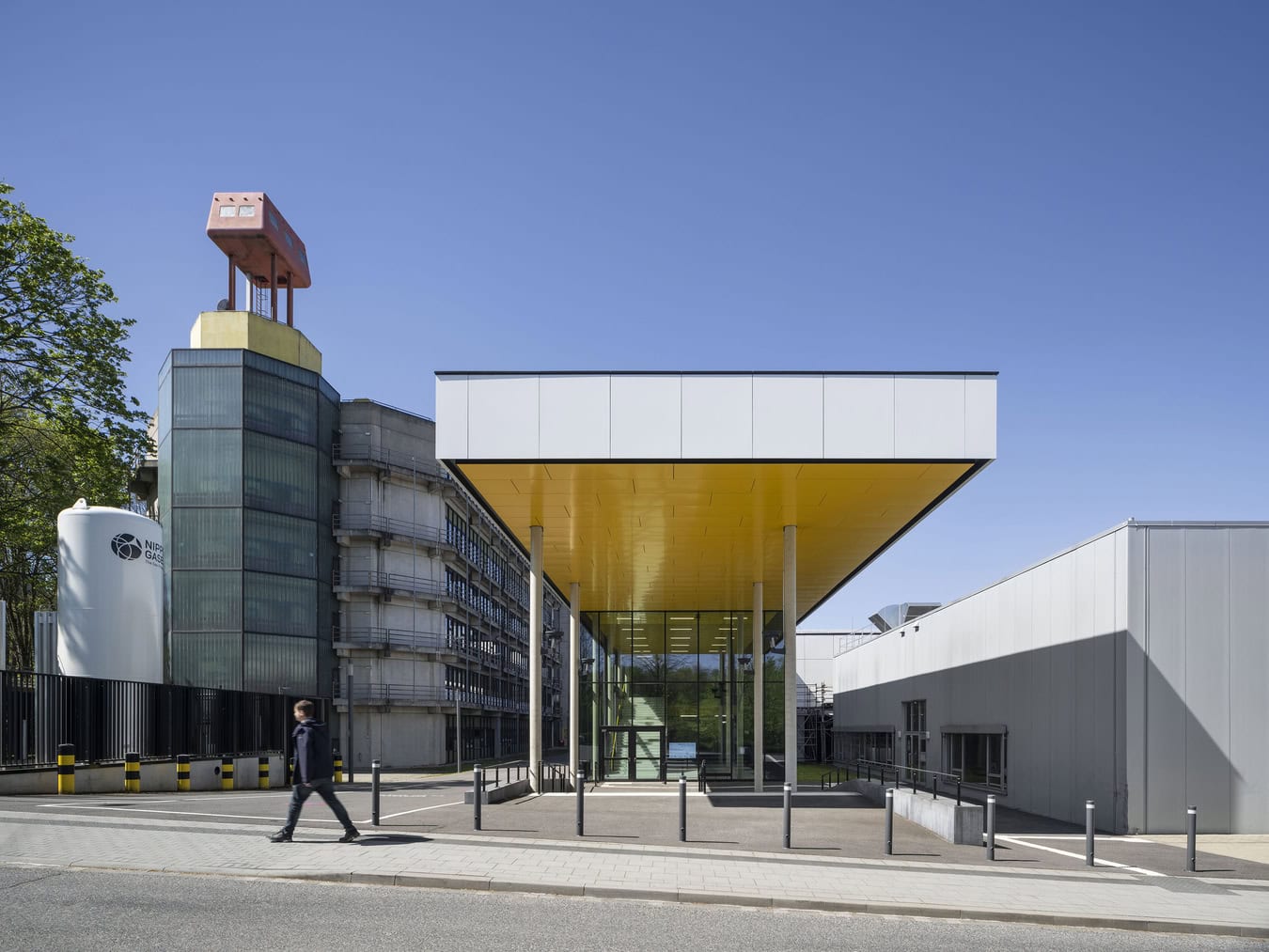
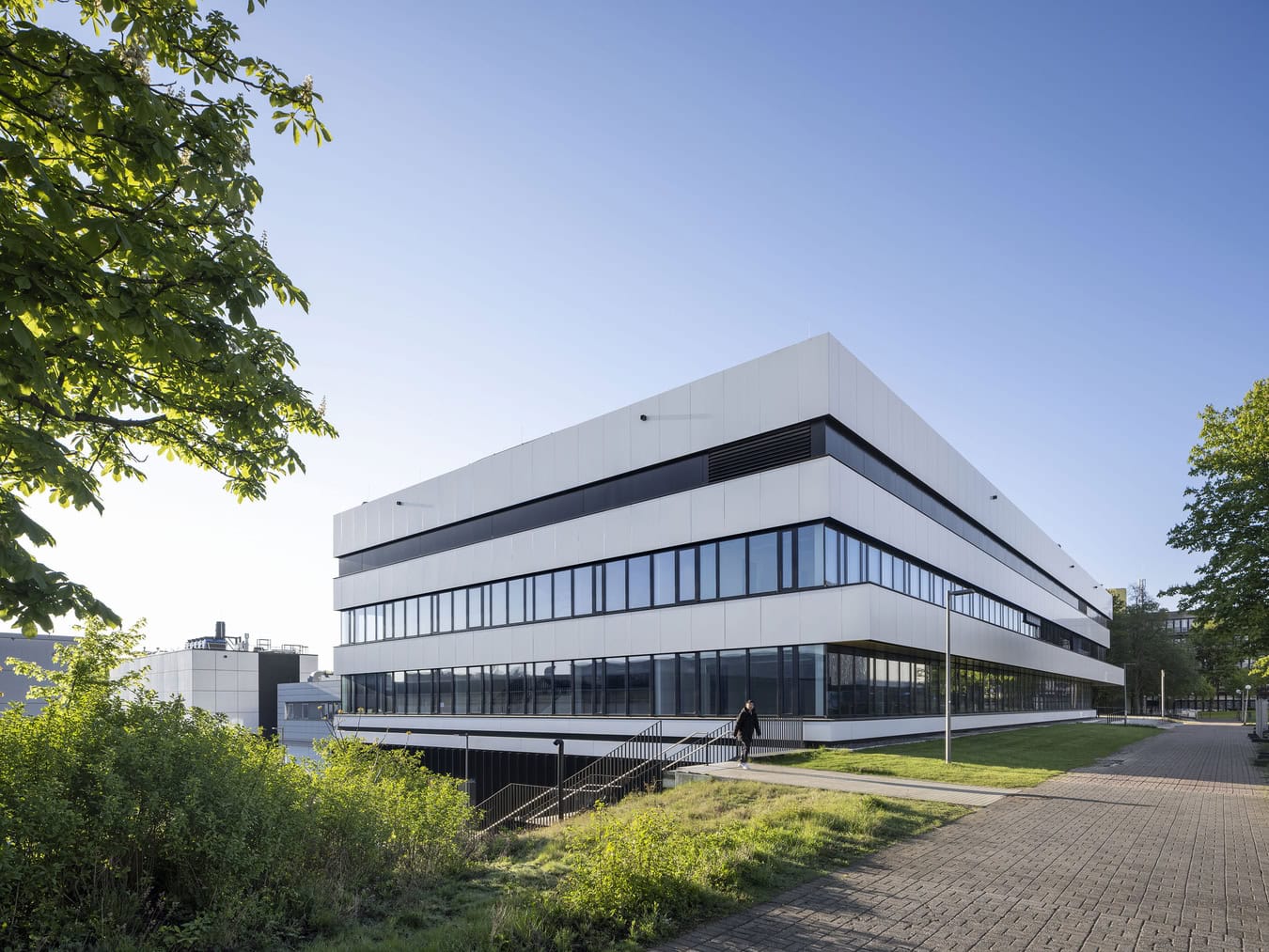
The widely overhanging roof marks the main entrance with an inviting gesture.

The construction of a new institute building and a cleanroom center marks the second phase of the restructuring of the RWTH Melaten Campus. The design creates the spatial conditions for a future-oriented research environment in which electrical engineering and physics collaborate more closely and share infrastructure.

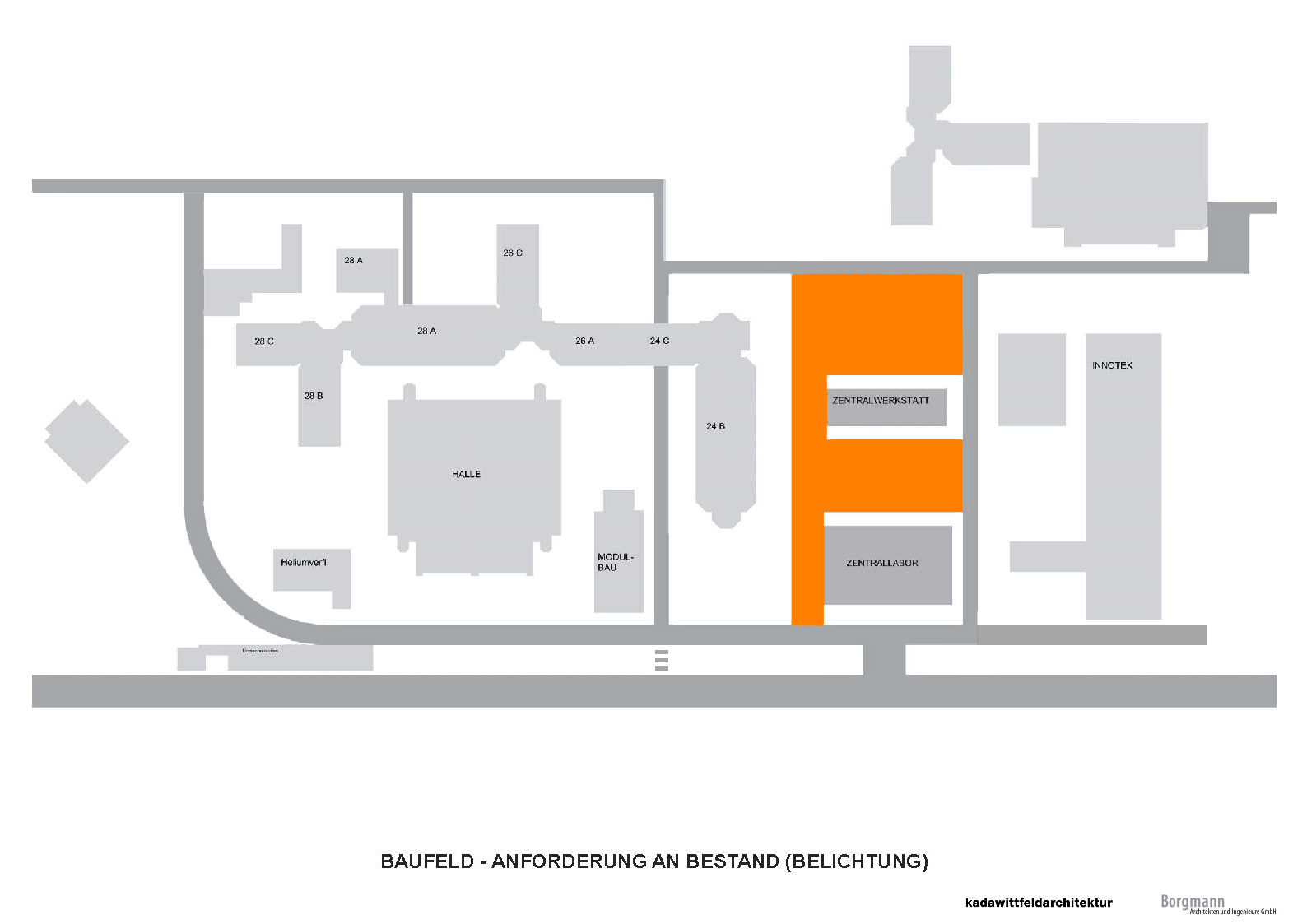
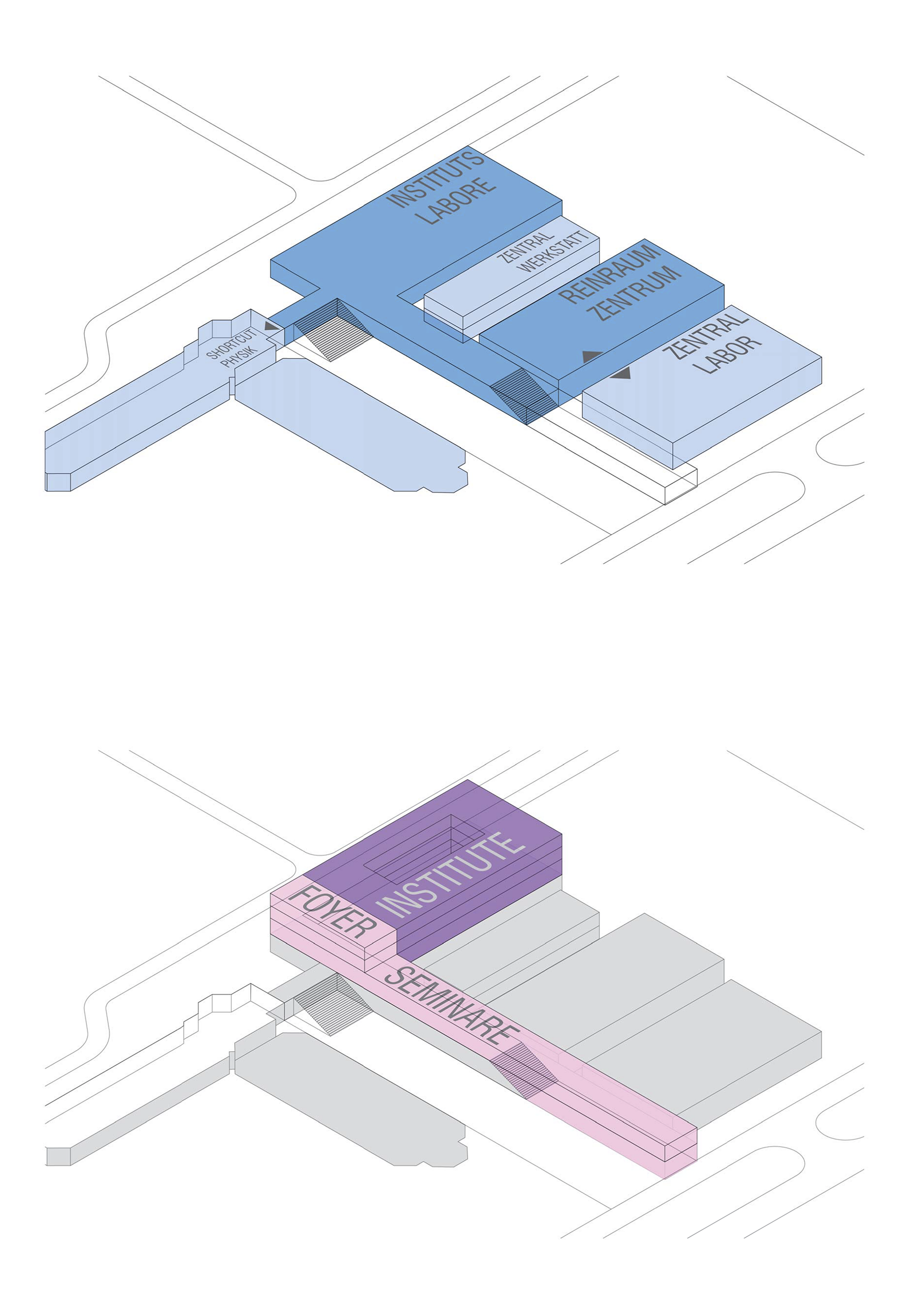
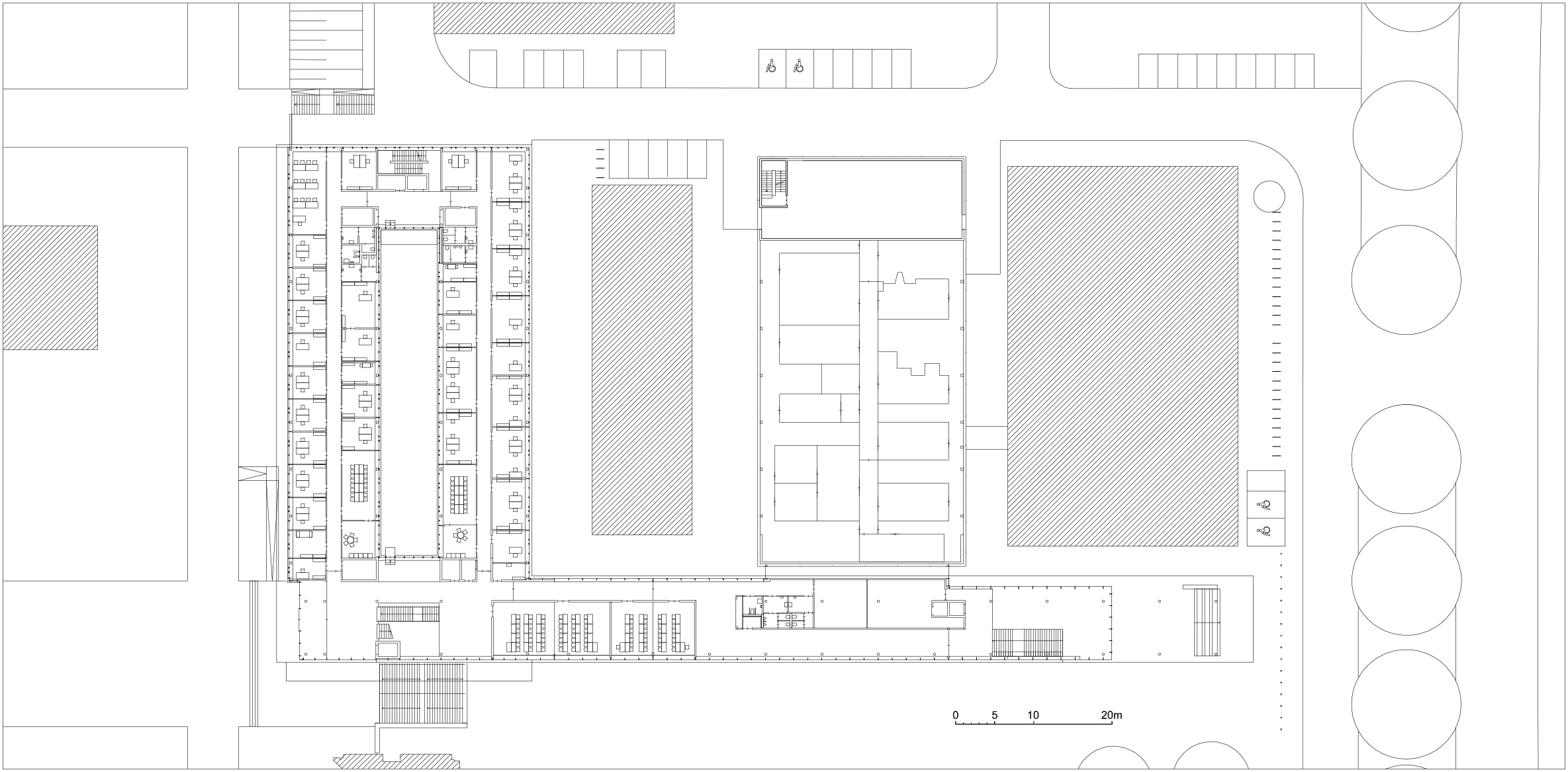
Three structures—the institute building, the cleanroom center, and the connecting bridge—form an ensemble that integrates and further develops the existing campus structures. It mediates between the existing campus and the expansion, between different scales and site levels, and between research, teaching, and public campus spaces.

©kadawittfeldarchitektur

The three new buildings complement the existing structures perfectly and integrate them into the complex.

©kadawittfeldarchitektur

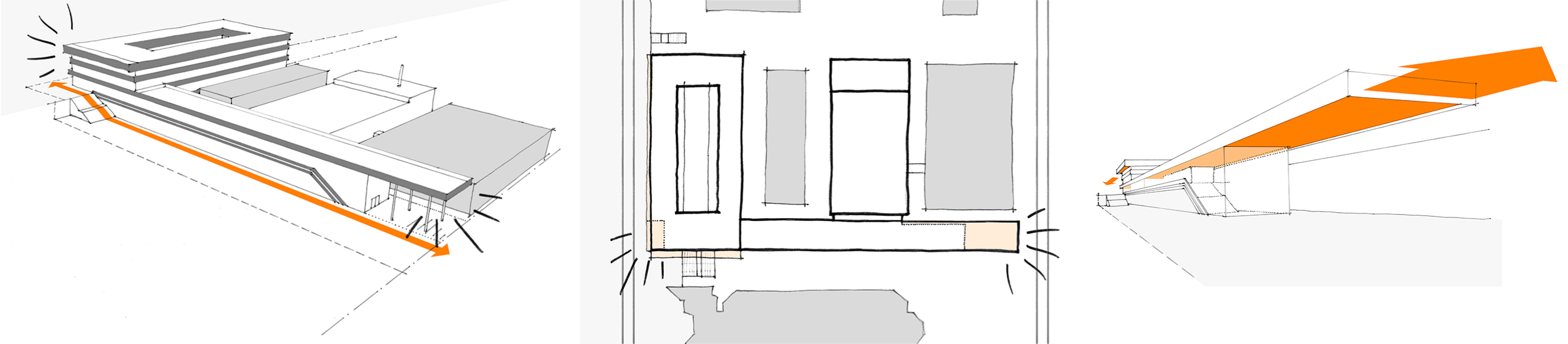
The connecting bridge links the buildings together and integrates the complex into the campus path network via two entrances at different levels.

The Cleanroom Center complements the existing research infrastructure as a standalone component between the Central Laboratory for Micro- and Nanotechnology and the eLab—Electromobility Laboratory; the institute building marks the western end of the row of buildings. The connecting bridge serves as a communicative backbone on the south side, linking these structures and integrating the complex into the campus’s path network via two entrances at different levels. This is where students’ paths cross—facilitating diverse encounters and scientific exchange. Integrated seminar and meeting rooms further promote cross-institute collaboration.

©Jens Kirchner

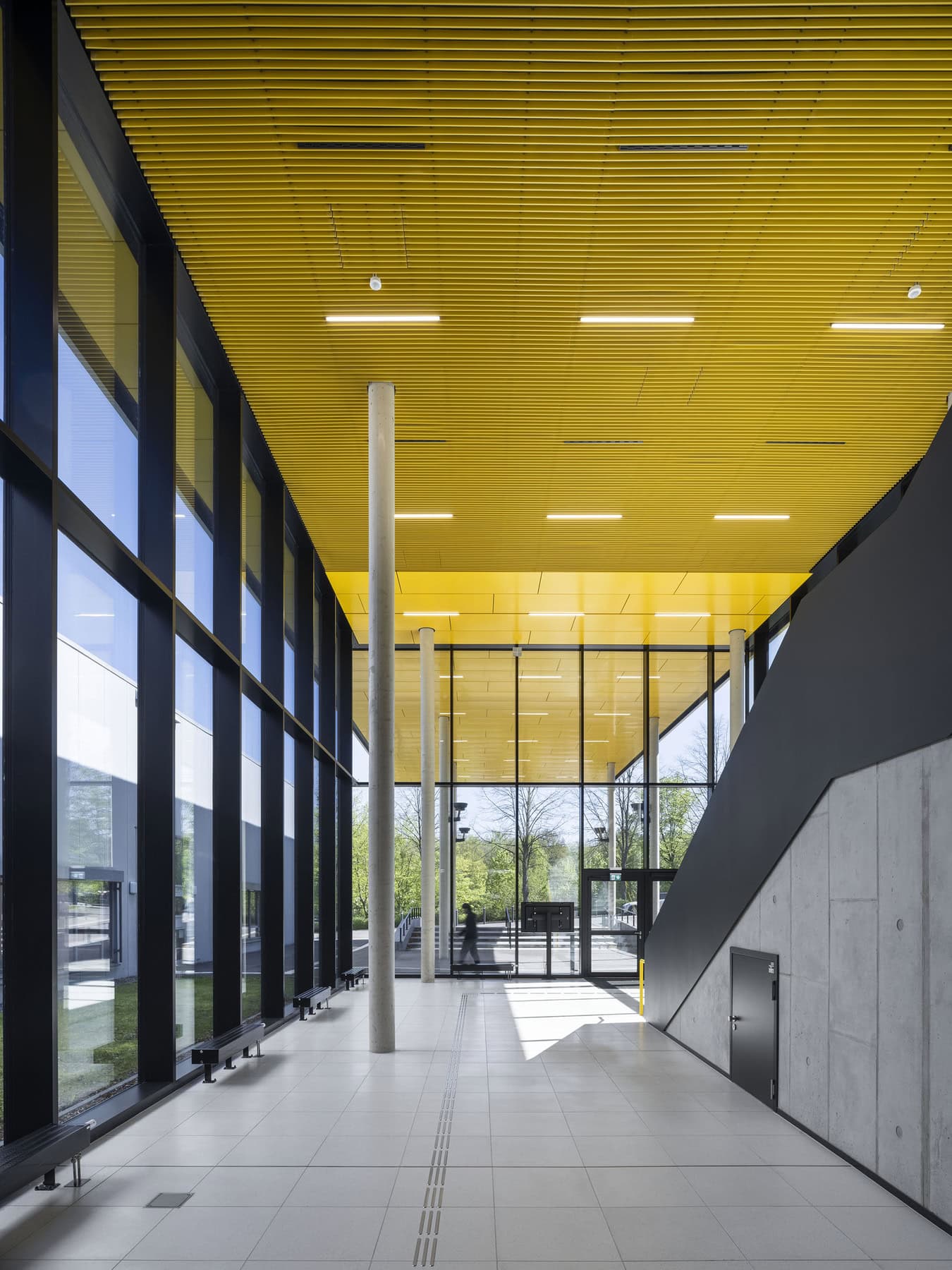
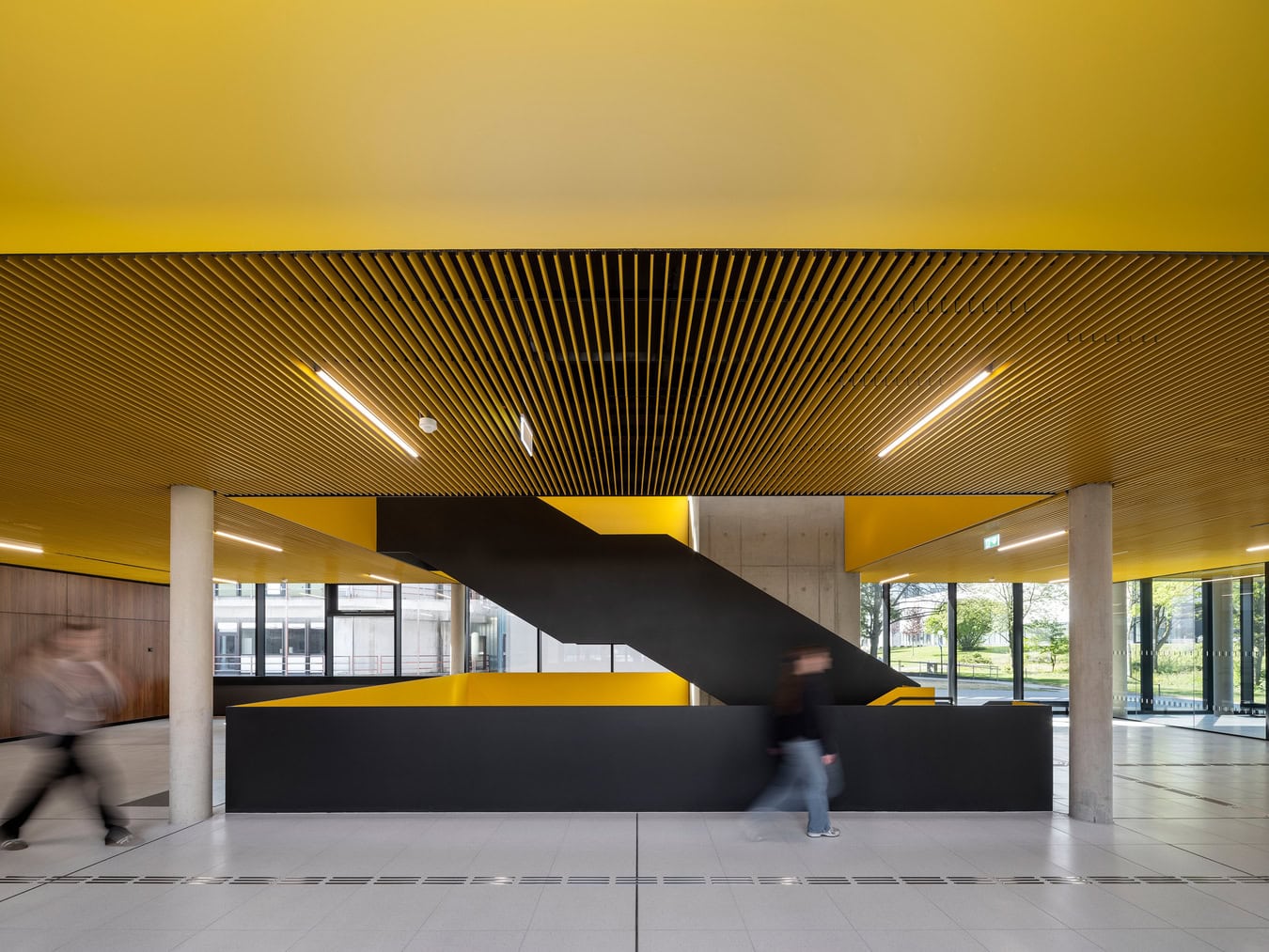
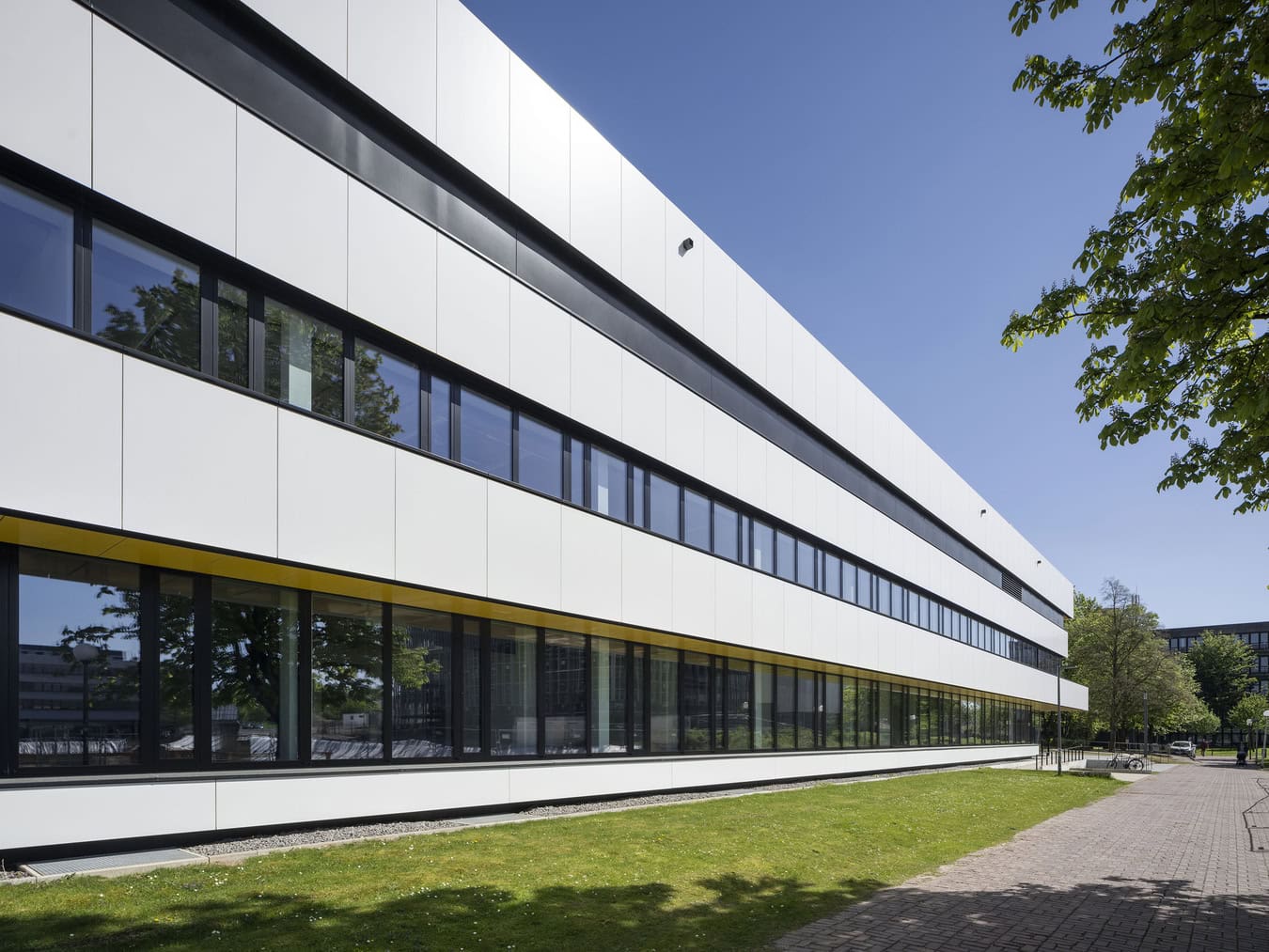
The striking yellow ceiling surfaces continue along the interior circulation routes.

©Jens Kirchner
©Jens Kirchner

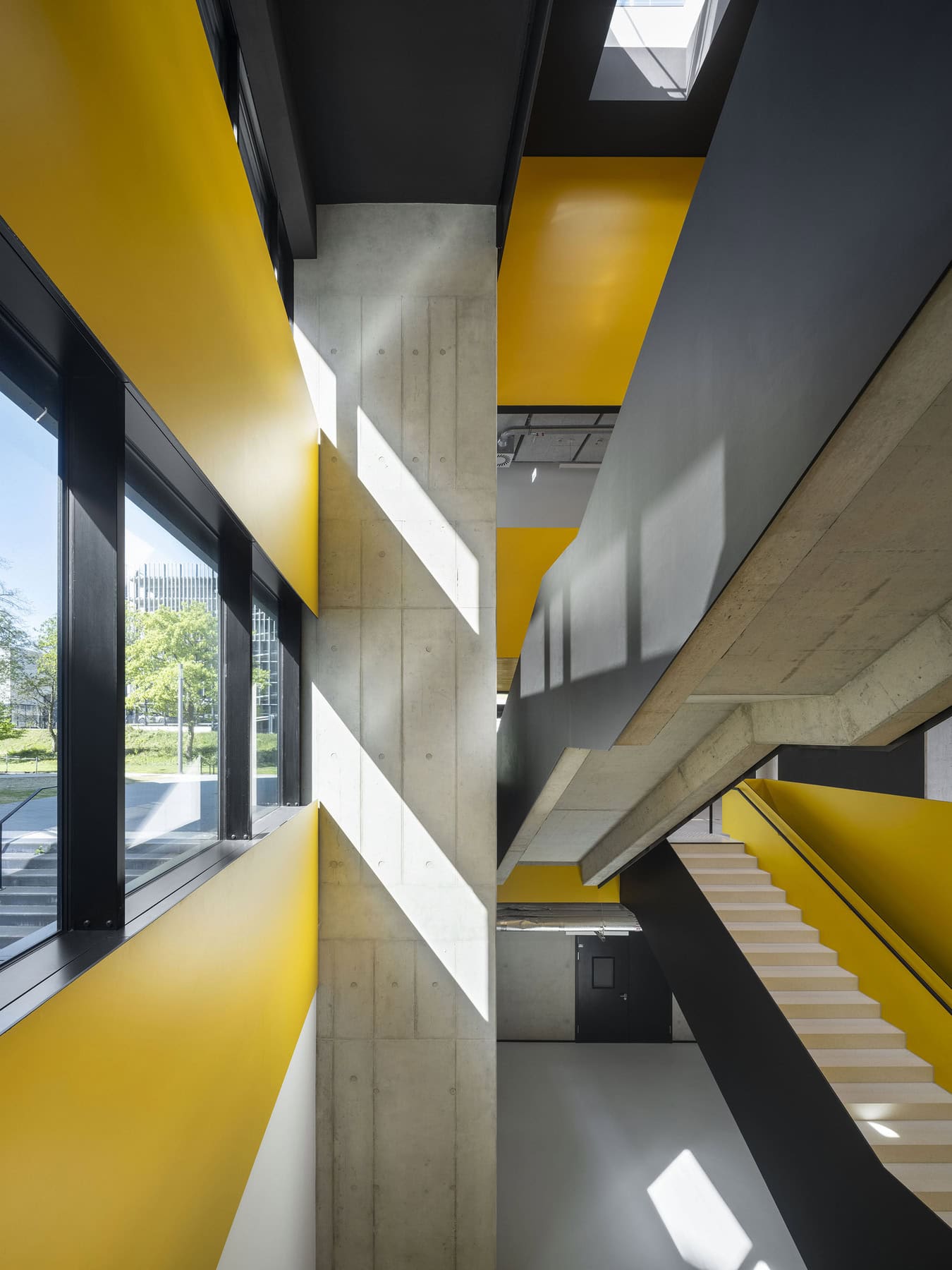
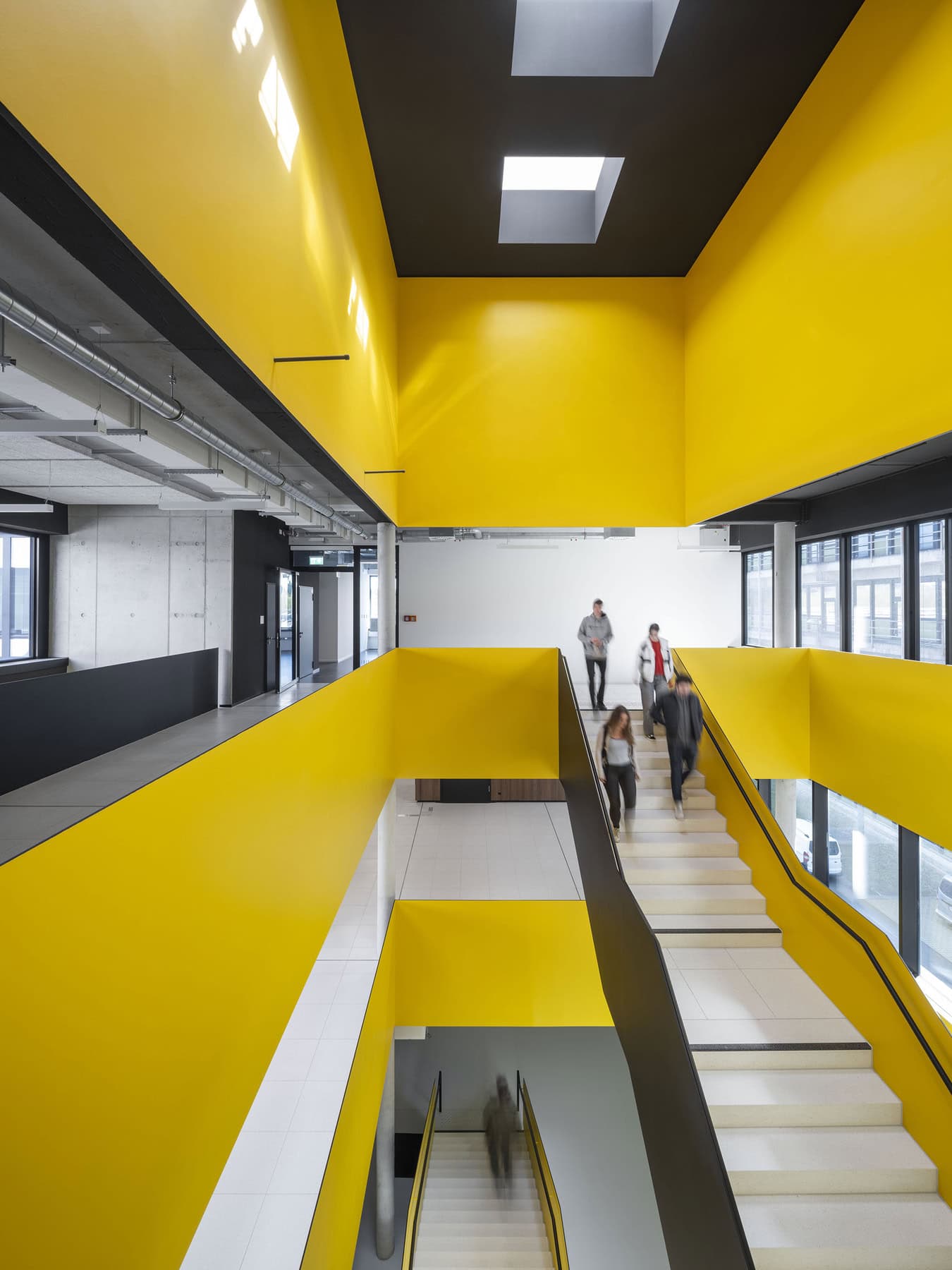
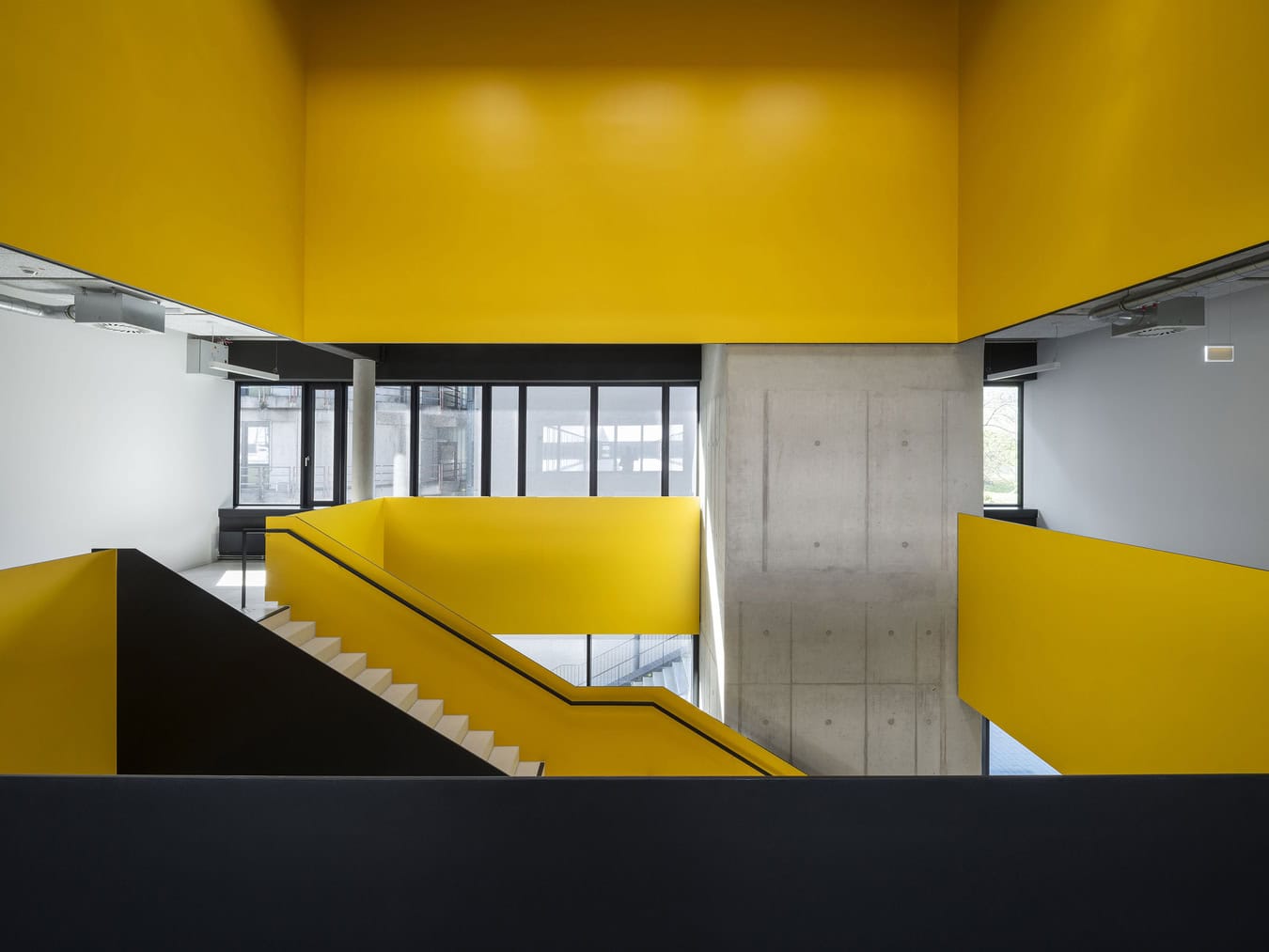
The connecting wing also defines the ensemble’s identity. Its widely cantilevered roof marks the main entrance and extends an inviting gesture toward the public space. Circulating white parapet bands unite the sculpturally designed institute building and the connecting wing into a single architectural whole. Distinctive yellow ceiling soffits reinforce the horizontal structure, highlight the entrances, and converge in the canopy to form a striking motif. Inside, they continue as an orientational element: they line the circulation routes and develop into striking vertical accents in the stairwells.

©Jens Kirchner
©Jens Kirchner
©Jens Kirchner
©Jens Kirchner

The white banded facades reflect the function of the institute building—which is both simple and sculptural—to the outside world.

©kadawittfeldarchitektur

All of the laboratory areas are located on the ground floor.

The institute and seminar rooms are concentrated on the upper floors.

The design was developed in close consultation with the future users. In workshops with the institutes and academic departments of RWTH, workflows, technical requirements, and future forms of collaboration were jointly developed and translated into a spatial layout.

This led to the central concept of a shared research level on the ground floor. All laboratory areas—from chemistry and physics labs to cleanrooms—are consolidated here according to their functional requirements. Concentrating these spaces on a single level shortens distances, facilitates collaborative work processes, and promotes interdisciplinary exchange. At the same time, it meets the special requirements of vibration-sensitive laboratories and supports efficient logistical processes.

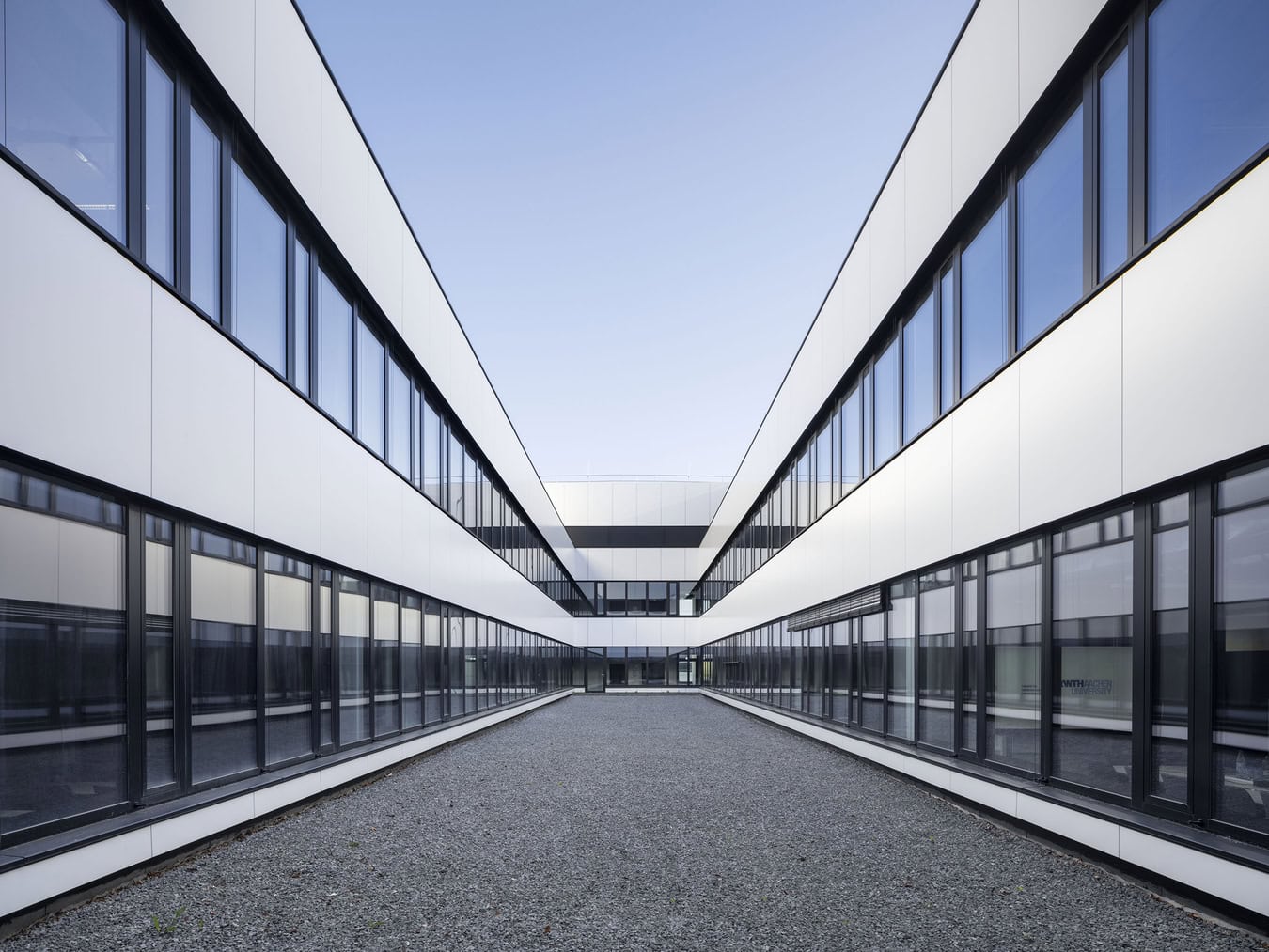
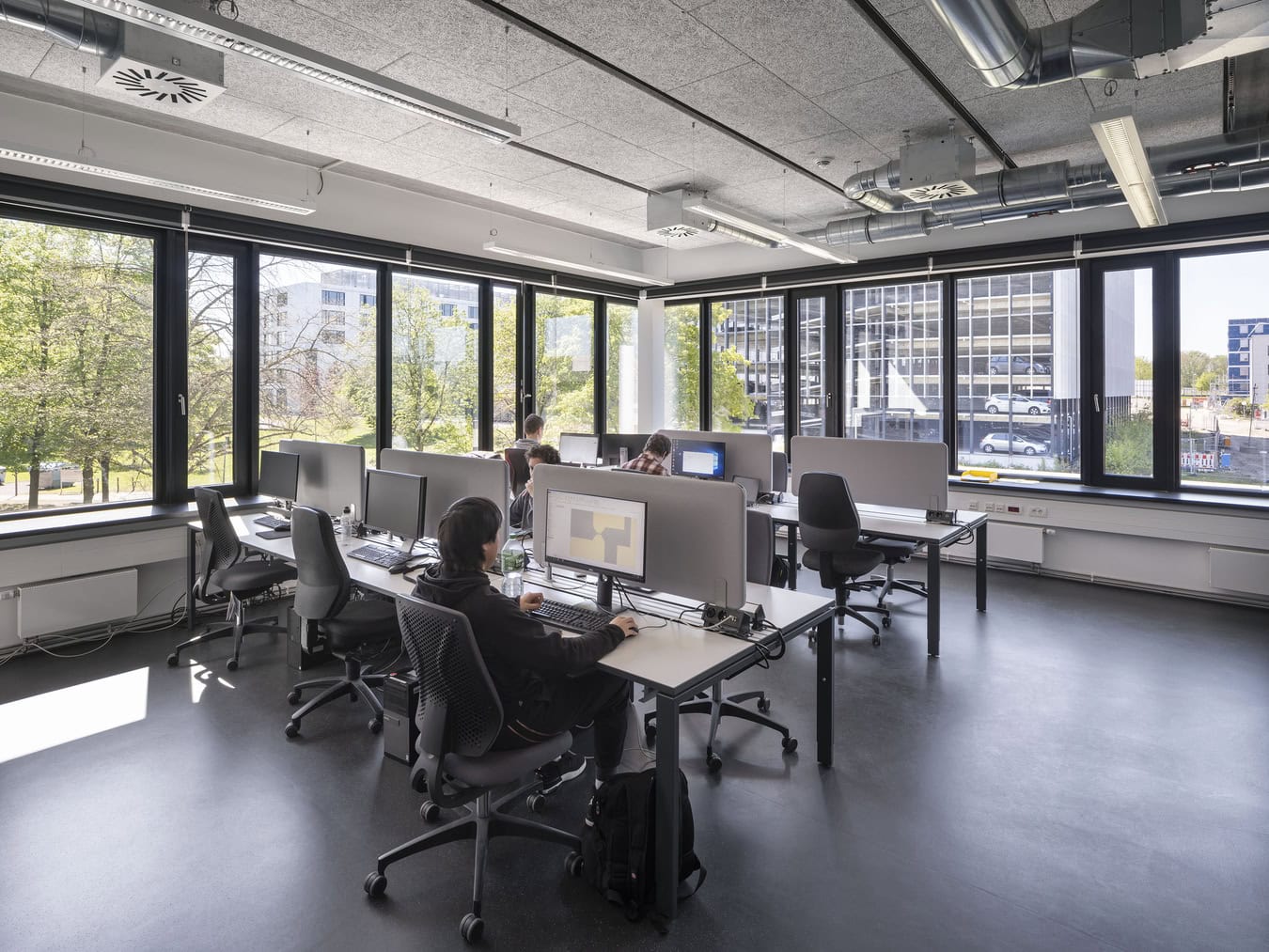
Above the research level, the institute areas are arranged in a ring around a central atrium. The compact two-wing structure creates short distances, allows for natural lighting in all work areas, and fosters diverse visual and communicative connections between the institutes. Together with the seminar and meeting rooms in the connecting wing, this creates a research environment that spatially supports exchange, collaboration, and innovation.


©Jens Kirchner

The institute’s departments are arranged in a ring-shaped pattern around an inner courtyard, above the research level.

©Jens Kirchner

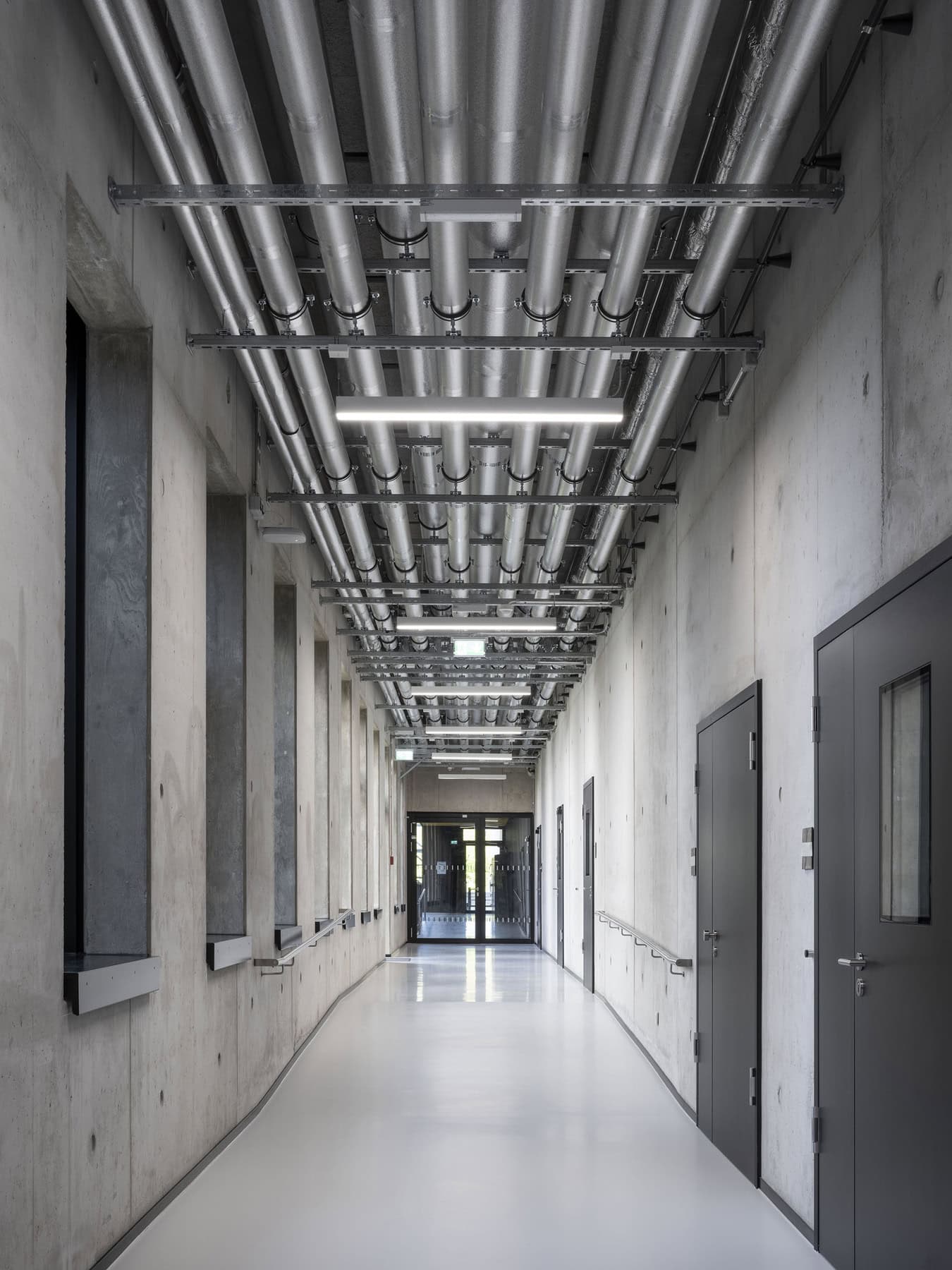
Hallway area on the ground floor.

©Jens Kirchner

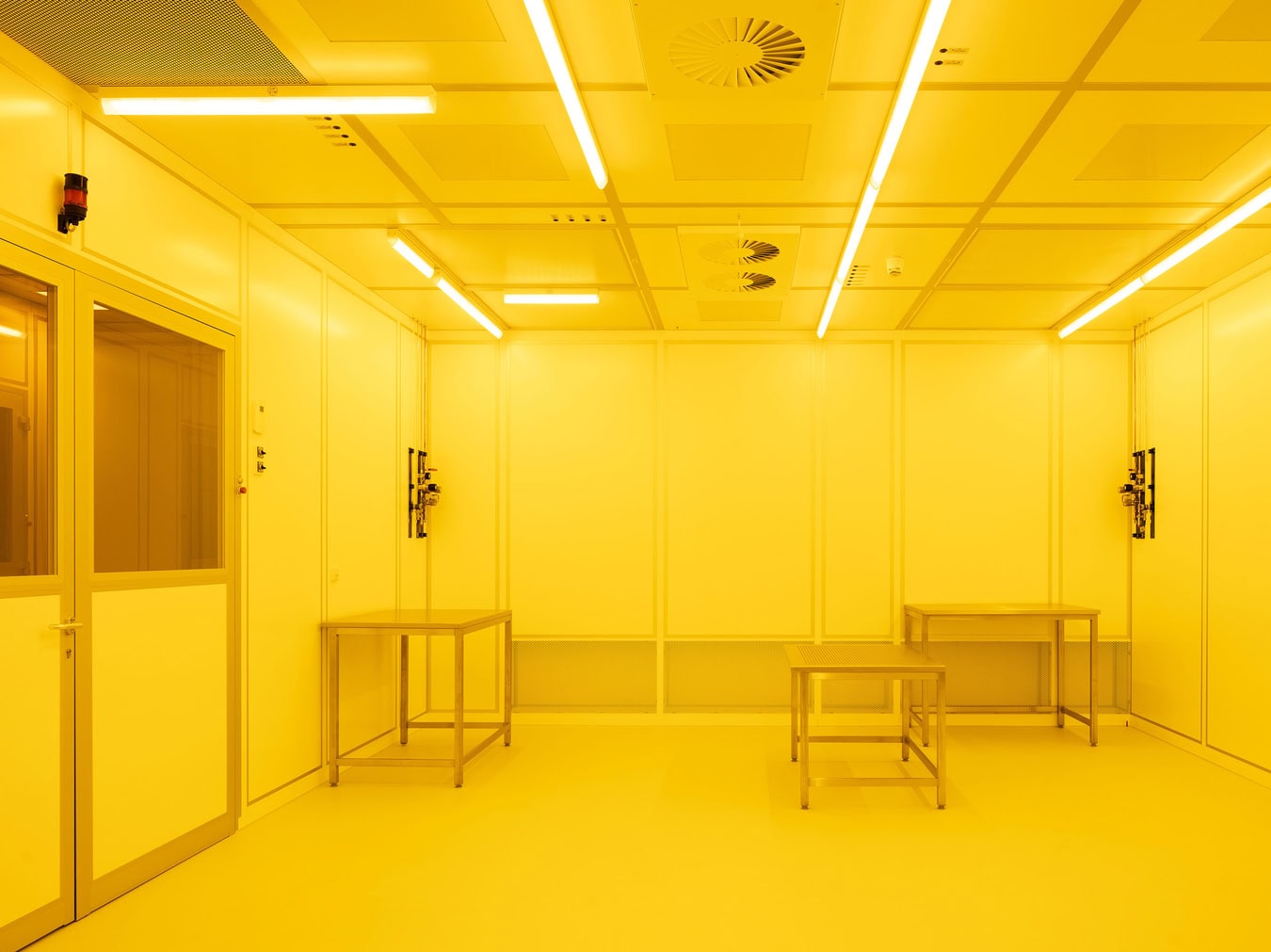
Cleanroom Laboratory

©Jens Kirchner

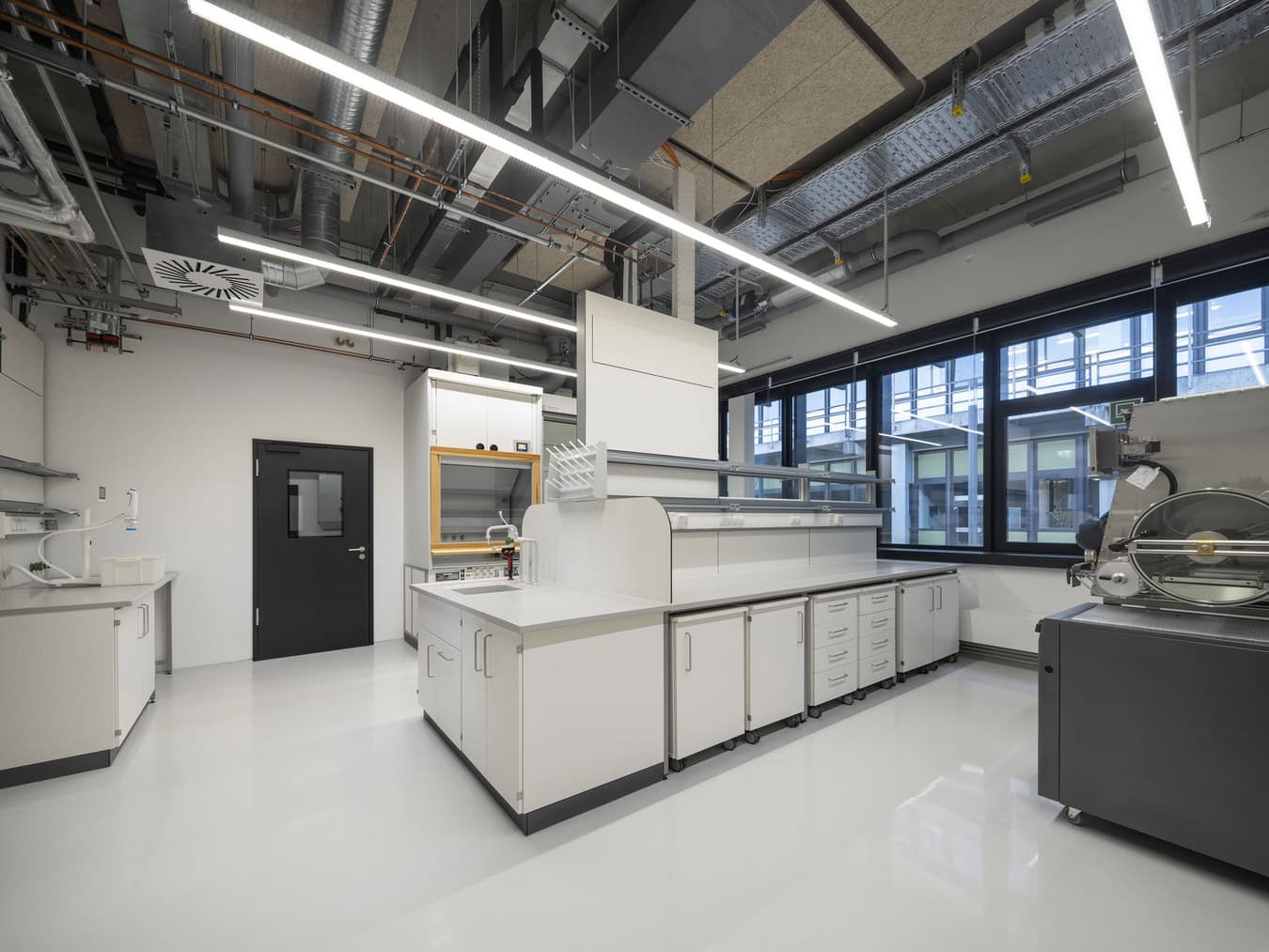
Laboratory spaces on the ground floor

©Jens Kirchner

Workspace on the upper floor of the institute building